
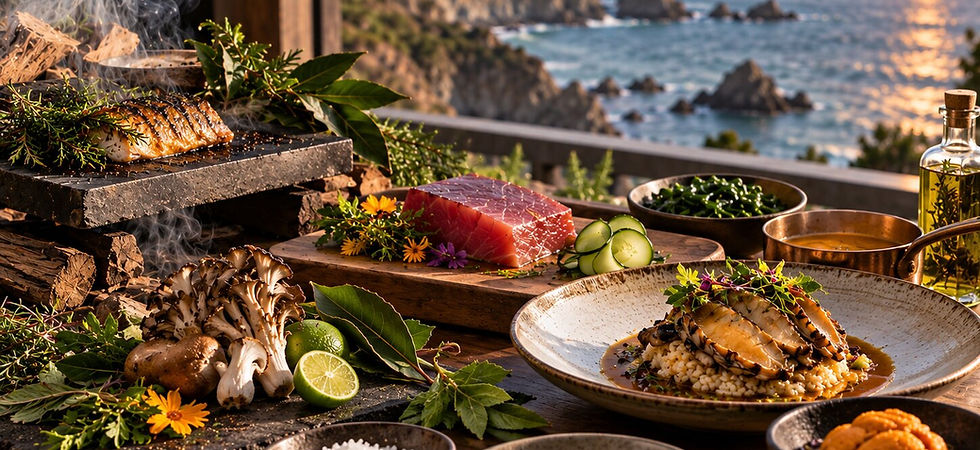
What Role Do Natural Flavors and Cooking Techniques Play?
A great dish does not always need more ingredients. Sometimes it needs the right ingredient in the right place.
That idea is easy to see in coastal cooking. Fresh fish already has a distinct flavor, so covering it with a heavy sauce does little to improve it. A better option can be to introduce a little smoke, a fresh herb, an aromatic leaf, or something acidic and let those flavors work around the main ingredient.
At Harbor House Inn on the Mendocino Coast, this way of building flavor appears throughout the tasting menu. Smoke, herbs, sea vegetables, leaves, fruit, and other natural ingredients are used in different ways, giving each course its own character without making the food feel overly complicated.
Smoke Can Change the Character of a Dish
Smoke is one of the clearest examples of how technique can affect flavor.
Take the rockfish with tomato and smoked butter. The fish remains the focus, but the smoked butter brings a deeper, almost toasted quality to the bite. It is a small detail, but one that changes the way the fish comes across.
There is another kind of smoke in the bluefin tuna with calendula smoke and cucumber. Cucumber brings a cool, clean note, while calendula introduces a floral element. The smoke sits between those flavors and gives the combination more depth.
Black cod takes the idea further. It is smoked over bay laurel and served with fava and potato. Black cod is naturally rich, so the aromatic smoke gives the fish another dimension without requiring a complicated sauce.
The important part is restraint. Smoke is powerful. Too much can hide the ingredient it was meant to enhance.
Sea Vegetables Bring the Coast to the Plate
Sea vegetables offer a direct link to the Pacific.
They have a savory, mineral quality that makes sense alongside seafood, but they do not have to appear as a large garnish or obvious centerpiece. At Harbor House Inn, a savory infusion of sea vegetables is part of the amuse-bouche, while cultured sea lettuce butter is served with seeded sourdough.
That second preparation is particularly interesting because the sea lettuce is incorporated into the butter rather than treated as an afterthought. Its coastal character becomes part of the bread service itself.
It is a subtle way of bringing the surrounding environment into the meal.
Herbs and Leaves Work on Aroma as Much as Taste
Some ingredients make their biggest impression through aroma.
Makrut lime leaf, verbena, fig leaf, sweet herbs, and Douglas fir all appear on the menu in different preparations. None needs to dominate a dish to be noticeable.
Makrut lime leaf has a bright, fragrant quality. Verbena brings a fresh herbal note. Fig leaf has a greener, more distinctive aroma, while Douglas fir can evoke the scent of the forest.
That matters because eating is not just about what happens on the tongue. The smell of a dish can influence how its flavors are perceived before the first bite.
Aromatic ingredients are particularly useful in a tasting menu because they can shift the mood of one course without making the food heavier.
Acidity Keeps Rich Flavors in Check
Rich food benefits from contrast.
That contrast might come from acidity, fruit, herbs, or something lightly sweet. Without it, several rich courses served one after another can begin to feel tiring.
The menu uses ingredients such as strawberry, verbena, makrut lime leaf, and fruit preparations to introduce brighter notes. These flavors are especially useful later in the meal, when the palate benefits from something lighter and more refreshing.
Acidity does not need to taste obviously sour. Its job can simply be to make a rich ingredient feel sharper and more balanced.
Sweetness Does More Than Belong in Dessert
Sweet flavors can play a similar balancing role.
Grilled honey and sweet herbs, for example, bring sweetness together with an herbal quality. The combination has more going on than sweetness alone.
Fruit also appears with aromatic ingredients rather than being treated as a separate flavor category. Strawberry and verbena, along with preparations involving plum, apricot, and peach, show how fruit can bring both sweetness and acidity to a menu.
This kind of contrast keeps a dish from tasting flat. A sweet element can make an herbal note stand out, while acidity can stop the sweetness from becoming too heavy.
Cooking Technique Gives Ingredients a Different Voice
The ingredient itself is only part of the story. What happens to it in the kitchen matters just as much.
Butter can be smoked. Sea lettuce can be cultured into butter. Fish can be smoked over bay laurel. Calendula can be used to introduce an aromatic smoky quality. Honey can be grilled.
The raw ingredients have not changed, but the techniques change what the diner notices about them.
That is one reason technique matters so much in fine dining. A chef does not necessarily need to add more ingredients to make a dish interesting. Changing temperature, texture, aroma, or intensity can be enough.
The Landscape Comes Through in More Than Seafood
When people think about coastal cuisine, seafood is usually the first thing that comes to mind. But the landscape around the ocean matters too.
At Harbor House Inn, ingredients from the sea appear alongside vegetables, mushrooms, herbs, fruit, and other land-based ingredients. Harbor House Ranch adds another part of that relationship, supplying seasonal ingredients that can make their way from the farm into the kitchen.
That combination creates a broader picture of the Mendocino Coast. Sea vegetables suggest the shoreline. Mushrooms and vegetables bring an earthy quality. Herbs and leaves can recall the surrounding vegetation.
The menu does not have to literally reproduce the landscape. The flavors can suggest it.
Why Restraint Makes These Flavors Work
Natural flavors are most effective when they have a reason to be there.
Smoked butter should support the fish. Bay laurel should add aroma to the black cod rather than turn it into a smoked dish. Sea lettuce should contribute its character without overwhelming the bread. Herbs should lift a preparation rather than turn every bite into an herb-forward dish.
That balance is particularly important at a restaurant working with fresh coastal ingredients. When the seafood is good, there is little reason to hide it.
The same principle applies to vegetables, mushrooms, fruit, and other seasonal ingredients. Good technique gives them room to speak.
Natural Flavor Is Part of the Culinary Identity
The combination of natural ingredients and careful technique gives coastal cuisine plenty of room for variation.
Smoke can bring depth. Sea vegetables can add savory coastal notes. Makrut lime leaf and verbena can brighten a dish through aroma. Fig leaf and Douglas fir can introduce more unusual botanical character. Grilled honey can bring warmth and sweetness.
At Harbor House Inn, these elements appear across savory courses, bread service, pre-dessert, and dessert rather than being confined to one part of the menu.
That is what makes the approach interesting. The flavors are not there simply to make a dish sound sophisticated. Each one has a practical role, whether that means adding aroma, creating contrast, softening richness, or giving a familiar ingredient a different character.
In the end, thoughtful cooking is often less about adding more and more about knowing when enough is enough.
Frequently Asked Questions
How do natural flavors improve coastal cuisine?
Natural flavors can add aroma, freshness, sweetness, acidity, smoke, or savory depth while allowing the main ingredient to remain recognizable. This works particularly well with delicate seafood.
Why is smoke used in fine dining?
Smoke can add another layer of aroma and flavor to an ingredient. At Harbor House Inn, smoked butter, calendula smoke, and bay-laurel-smoked black cod show different ways the technique can be used.
What do sea vegetables add to a dish?
Sea vegetables can bring savory, mineral, and marine qualities. They can be used in small amounts or incorporated into preparations such as an infusion or cultured butter.
Why are aromatic leaves used in cooking?
Ingredients such as makrut lime leaf, verbena, fig leaf, and Douglas fir can influence the aroma of a dish as much as its taste. They allow a chef to introduce distinctive botanical notes without making the dish overly heavy.
How does acidity balance rich food?
Acidity gives rich ingredients a sharper, fresher quality. It can prevent a dish from feeling too heavy and can help create contrast between courses in a tasting menu.
Does cooking technique change an ingredient's flavor?
Yes. Smoking, grilling, culturing, infusing, and other techniques can alter an ingredient's aroma, texture, and intensity. The same ingredient can taste quite different depending on how it is prepared.


Comments