

How Does a Tasting Menu Tell the Story of a Place?
A tasting menu can tell you quite a lot about where you are before anyone explains the story behind it.
The ingredients may reveal what grows nearby. The seafood can point to the waters along the coast. Herbs, mushrooms, fruit, and other plants can hint at the surrounding landscape. Even the way something is smoked, fermented, grilled, or served can reflect the way a chef thinks about the region.
At Harbor House Inn on the Mendocino Coast, the connection between food and place is especially visible. The restaurant sits above the Pacific in Elk, California, and Chef Matthew Kammerer builds the cooking around the ingredients, seasons, and landscape of the area. The result is a tasting menu that feels connected to its surroundings rather than simply borrowing the idea of “coastal cuisine.”
What Makes a Tasting Menu Tell a Sense-of-Place Story?
A tasting menu has an advantage that an à la carte menu does not: it can take the diner through a sequence.
One course might begin with something from the ocean. Another may bring in mushrooms or vegetables from the land. A later course might introduce fruit, herbs, or an aromatic ingredient associated with the surrounding landscape.
Taken individually, these ingredients are interesting. Put together over several courses, they begin to create a picture.
That picture does not have to be literal. A restaurant does not need to put a piece of seaweed on every plate to communicate that it is near the Pacific. The relationship can be much more subtle.
The Pacific Ocean Becomes Part of the Menu
For a restaurant on the Mendocino Coast, seafood is an obvious starting point, but the way it is treated matters.
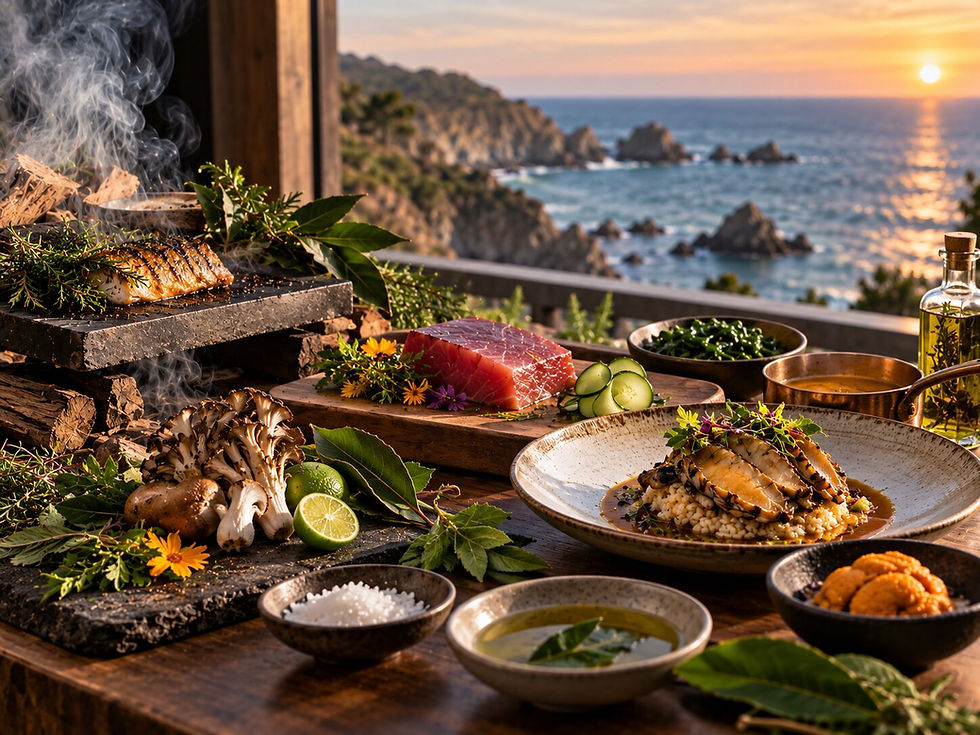
Harbor House Inn's menu has featured preparations such as rockfish with tomato and smoked butter, bluefin tuna with calendula smoke and cucumber, and red abalone with koshihikari rice and a sauce made from abalone offal.
These combinations say more than “we serve seafood.”
The rockfish keeps the Pacific at the center while tomato and smoked butter change the texture and flavor around it. Bluefin tuna meets cucumber and the floral character of calendula. Red abalone is paired with rice and a sauce made from the shellfish itself, making use of an ingredient that might otherwise be overlooked.
The ocean is therefore represented through both the ingredients and the way the kitchen works with them.
Land Ingredients Give the Menu Another Dimension
A coastal menu does not have to stop at the shoreline.
Maitake mushrooms, fava, potato, trumpet mushrooms, and other seasonal vegetables bring the land into the meal. One menu pairing combines fried, infused maitake mushroom with purple sea urchin, placing an earthy ingredient next to something distinctly marine.
Another course pairs black cod smoked over bay laurel with fava and potato. The fish may come from the ocean, but the plate is not trying to recreate the ocean alone.
Harbor House Ranch adds another connection. The 320-acre property south of Point Arena includes gardens and growing areas that supply seasonal ingredients for the kitchen. The farm and restaurant operate in conversation with each other, allowing what is growing to influence what eventually appears on the table.
Seasonality Keeps the Story Moving
A place is not the same throughout the year, and a seasonal tasting menu should not be either.
Ingredients appear when they are available, at different stages of the growing season and in different combinations. That means a guest visiting in one season may encounter something quite different from a guest visiting several months later.
At Harbor House Inn, this can include vegetables, mushrooms, fruit, herbs, and farm-grown ingredients alongside seafood.
For the diner, that changing menu is part of the story. Instead of treating the region as a fixed collection of signature ingredients, the kitchen can respond to what is available at a particular moment.
Cooking Techniques Can Reflect the Landscape Too
The story of a place is not only told through ingredients.
Smoke, infusion, fermentation, grilling, and other techniques can give those ingredients a different character. Smoked butter with rockfish adds depth. Black cod smoked over bay laurel introduces an aromatic quality. Cultured sea lettuce butter brings a marine ingredient into the bread service.
Other ingredients, including makrut lime leaf, verbena, fig leaf, Douglas fir, grilled honey, and sweet herbs, can influence aroma and balance across the menu.
These details matter because they prevent “sense of place” from becoming a simple list of local ingredients. The technique gives the chef another way to interpret the surroundings.
Foraging Can Add Another Layer
Foraging is another way a restaurant can build a relationship with its environment.
When appropriate ingredients are gathered from the surrounding landscape, the boundary between restaurant and region becomes less obvious. Plants and natural flavors that diners might normally overlook can become part of a dish.
At Harbor House Inn, the broader emphasis on foraging, farming, and coastal ingredients supports this relationship with the Mendocino environment.
The important point is that responsible sourcing matters. Using something simply because it is local does not automatically make it meaningful. The ingredient needs to fit the dish, be harvested responsibly, and have a reason for being there.
Even Dessert Can Continue the Story
The sense of place does not have to disappear when the savory courses end.
The menu has included ingredients such as Douglas fir, fig leaf, strawberry, verbena, plum, apricot, peach, lemon verbena, marigold, groundcherry, and candy cap mushroom.
A candy cap mushroom macaron, for example, takes an ingredient associated with the region's forests and places it in a completely different context from a savory mushroom course.
That kind of shift is one of the strengths of a tasting menu. Familiar ingredients can appear in unexpected forms, allowing the diner to notice them differently.
Why the Setting Matters
Food does not exist separately from the place where it is served.
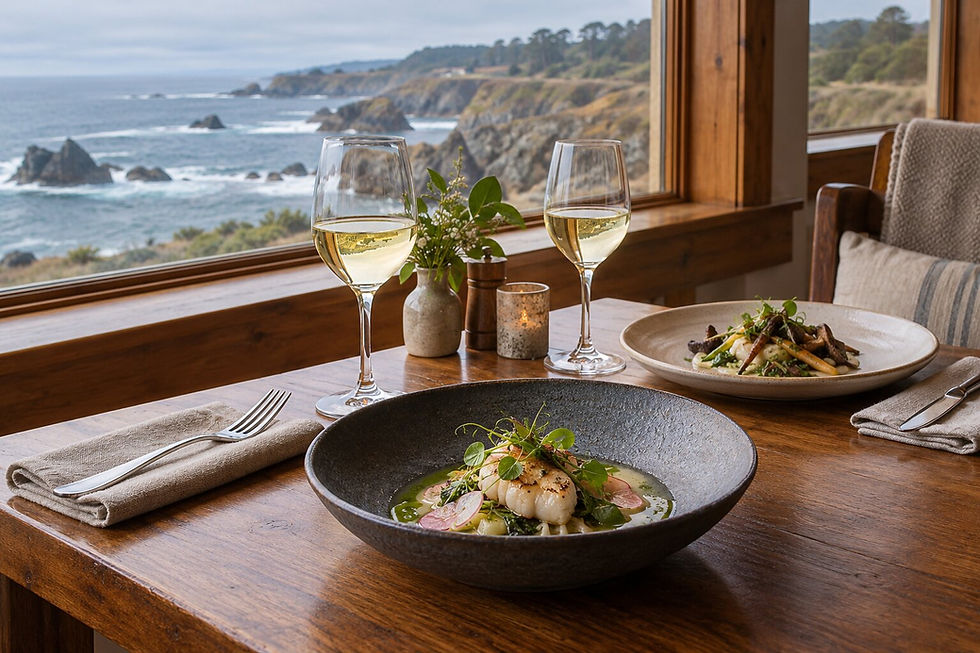
Harbor House Inn's dining room overlooks the Pacific coastline. That setting changes how the food is received. The ocean outside the windows is not merely a backdrop for a photograph; it reinforces the connection between the meal and the coastal environment being represented on the plate.
The same menu served somewhere far inland would tell a slightly different story.
This is part of what makes destination dining compelling. The restaurant, landscape, ingredients, and meal become connected parts of the visit.
A Tasting Menu Is an Interpretation, Not a Geography Lesson
The best sense-of-place menus do not try to explain every ingredient.
Instead, they give diners enough clues to form their own impression. Seafood suggests the coast. Mushrooms and vegetables bring in the land. Herbs and leaves introduce aromas associated with the surrounding environment. Seasonal changes keep the menu from becoming static.
At Harbor House Inn, those elements come together through Chef Matthew Kammerer's cooking, Harbor House Ranch, coastal sourcing, and the physical setting above the Pacific.
That is ultimately how a tasting menu can tell the story of a place. It does not need to describe the Mendocino Coast in words. It can let the ingredients, techniques, seasons, and setting do the talking.
Frequently Asked Questions
What does “sense of place” mean in a tasting menu?
A sense of place means that the ingredients, techniques, seasons, and presentation give diners a connection to the region where the restaurant is located.
How can seafood represent a place?
Seafood can reflect the local waters, fishing traditions, and coastal environment. The way the seafood is prepared can add another layer to that connection.
Does a tasting menu have to use only local ingredients?
No. A restaurant can combine local ingredients with products from elsewhere. What matters is how thoughtfully the ingredients relate to the menu and the restaurant's culinary point of view.
How does seasonality affect a tasting menu?
Seasonality changes which ingredients are available and at their best. A seasonal tasting menu can therefore change throughout the year rather than relying on exactly the same dishes.
How does Harbor House Ranch influence the menu?
Harbor House Ranch supplies seasonal ingredients that can be used in the restaurant's cooking. It creates a direct connection between growing, harvesting, and menu development.
Can dessert tell a story about a region?
Absolutely. Ingredients such as mushrooms, herbs, fruit, leaves, and flowers can appear in desserts and introduce flavors associated with the surrounding landscape in unexpected ways.
Why does the restaurant's location matter to a tasting menu?
The physical setting can reinforce the food's story. At Harbor House Inn, the ocean-view dining room places the meal directly within the Mendocino Coast landscape that influences the cuisine.



Comments