

What Makes a Restaurant a Culinary Destination?
Updated: Sep 1
A memorable restaurant can do more than serve a good meal. Some restaurants become places people plan an entire trip around. They are not simply stops along an itinerary; the restaurant itself becomes part of the reason for going.
That is what makes a culinary destination different.
The food matters, of course, but so do the setting, the people behind the kitchen, the ingredients, the way the meal is served, and the connection between the restaurant and its surroundings. A restaurant on the coast, for example, has an opportunity to make the ocean, local farms, forests, and seasons part of the dining experience.
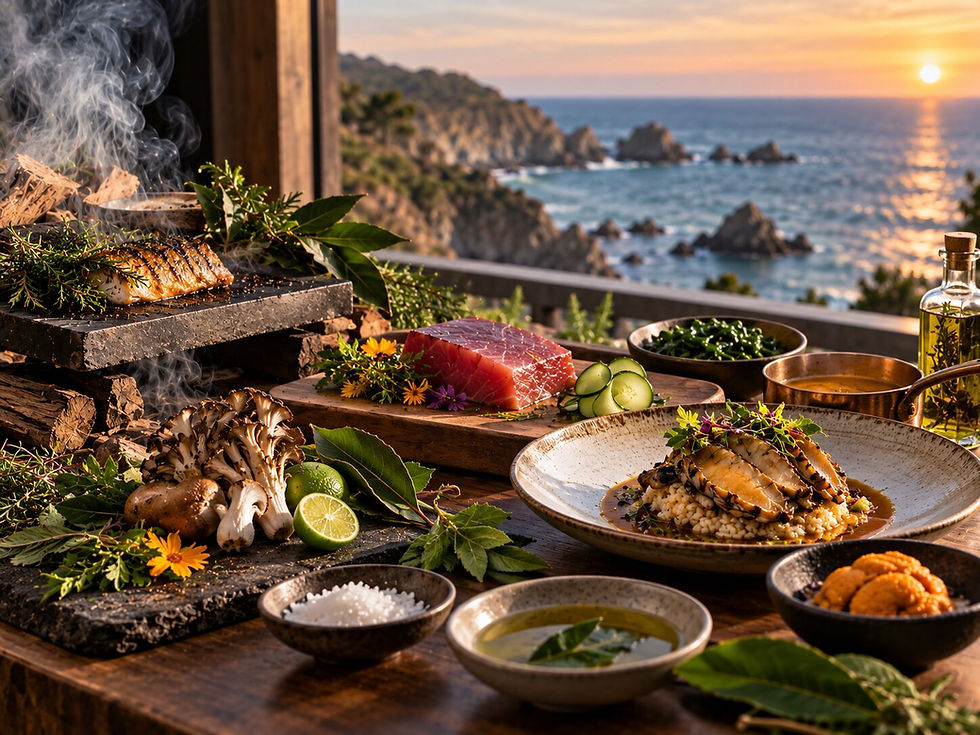
Harbor House Inn on California's Mendocino Coast is an example of this approach. Its small ocean-view dining room, seasonal menu, local sourcing, farm connection, and coastal setting all contribute to an experience that goes beyond a conventional restaurant visit.
What Is a Culinary Destination?
A culinary destination is a restaurant that becomes a meaningful reason to travel.
People may visit because of a chef, a particular style of cooking, a tasting menu, a famous dish, a unique location, or a combination of all of these things.
The important difference is that the restaurant has an identity strong enough to stand on its own.
A culinary destination does not necessarily need to be large or elaborate. In fact, some of the most memorable dining experiences take place in relatively small restaurants where the menu is closely connected to the local area.
Is Great Food Enough to Make a Restaurant a Destination?
Great food is the starting point, but it is rarely the whole story.
A restaurant can serve an excellent meal and still be somewhere guests visit once while traveling through an area. A culinary destination gives people another reason to make the journey.
That might be the chance to eat a seasonal tasting menu prepared around local ingredients. It might be a restaurant overlooking the ocean, surrounded by farmland, or located in a region known for a particular agricultural product.
The setting can become part of the meal.
At Harbor House Inn, the dining room overlooks the Pacific coastline. The location immediately changes the context of the food. Guests are not simply eating seafood and vegetables; they are experiencing them in the environment that influences the kitchen.
How Does Location Shape a Culinary Destination?
Location can influence a restaurant in ways that go well beyond the view from the dining room.
On the Mendocino Coast, the surrounding environment provides access to seafood, sea vegetables, coastal plants, forests, and agricultural products. These ingredients can influence what appears on the menu.
The result is a stronger relationship between the food and the place.
A dish made with a local fish, foraged coastal ingredient, or produce grown nearby can communicate something about the region without requiring a lengthy explanation.
That is one of the strongest characteristics of destination dining: the meal could not feel the same somewhere else.
Why Does a Restaurant Need a Sense of Place?
A sense of place gives a restaurant an identity that is difficult to copy.
For Harbor House Inn, the Mendocino Coast is not just a backdrop. The surrounding landscape influences the ingredients, the menu, the agricultural program, and the way the restaurant approaches cooking.
The kitchen works with products from the surrounding area and uses techniques such as fire, steam, and smoke to bring out their natural character.
This creates a style of cooking that feels connected to the property and its location.
How Does a Chef Turn Local Ingredients Into Destination Dining?
Local ingredients alone do not guarantee an interesting meal.
The chef has to understand what each ingredient can contribute and how it fits with the rest of the menu.
Consider a few preparations associated with Harbor House Inn's menu:
Rockfish with tomato and smoked butter combines delicate seafood with acidity and smoke.
Maitake mushroom with purple sea urchin brings an earthy ingredient together with a rich marine flavor.
Red abalone with Koshihikari rice and abalone offal sauce uses different parts of the shellfish to build a deeper dish.
Black cod smoked over bay laurel with fava and potato combines a rich fish with produce and aromatic smoke.
These dishes are interesting not simply because the ingredients are premium. They show how the kitchen builds relationships between products from the coast, farm, and surrounding landscape.
Why Does Seasonality Matter?
A restaurant built around local ingredients cannot treat the menu as something fixed throughout the year.
The growing season changes.
Seafood availability changes.
Weather changes.
Wild ingredients appear at different times.
That naturally leads to a menu that evolves.
For guests, this means a visit in spring may not offer the same experience as a visit in autumn. Instead of seeing that as a limitation, a seasonal restaurant can make the changing menu part of its identity.
It gives diners a reason to return.
What Role Does the Farm Play?
A restaurant's connection to local food becomes stronger when the kitchen works directly with growers.
Harbor House Ranch is a 320-acre property south of Point Arena, with agricultural land that supports the culinary program. The farm has expanded from its original half-acre footprint and includes annual crops as well as perennial plants, trees, and shrubs.
The relationship between the farm and kitchen allows the culinary team to work with produce according to what is growing rather than treating vegetables as interchangeable commodities.
That connection can affect flavor, timing, preparation, and menu development.
Why Does a Small Dining Room Matter?
Size can have a surprising effect on the character of a restaurant.
Harbor House Inn's restaurant has a 20-seat ocean-view dining room. A room of that scale creates a very different atmosphere from a large dining room serving hundreds of people each evening.
The experience can feel more focused.
The staff has fewer tables to manage. The kitchen can concentrate on the progression of the meal. Guests have a closer relationship with the room, the service, and the surroundings.
For destination dining, intimacy can be an advantage.
How Does a Tasting Menu Contribute to the Experience?
A tasting menu gives a chef control over the sequence of a meal.
Instead of asking guests to choose one entrée, the kitchen can guide them through a series of preparations.
One course might emphasize seafood. Another may highlight vegetables or mushrooms. A later course can move toward fruit, herbs, or dessert.
This progression allows the chef to tell a story through food without making every course taste the same.
At Harbor House Inn, the menu changes with the seasons and reflects the products available from the surrounding region. That makes the tasting menu part of the restaurant's identity rather than simply a collection of individual dishes.
Does Fine Dining Have to Be Complicated?
Not necessarily.
Some of the strongest dishes rely on a relatively small number of ingredients.
A piece of fish cooked carefully over smoke can say more about the ingredient than a plate covered with several heavy sauces. Fresh vegetables may need little more than proper cooking and seasoning.
Harbor House Inn's stated approach to cooking focuses on natural sources of heat, including fire and steam, to highlight the ingredients themselves.
That kind of restraint can be particularly effective when the restaurant is working with high-quality local products.
What Makes the Experience Memorable?
People rarely remember only one part of a destination restaurant.
They remember the combination.
The drive to the property.
The first view of the coastline.
The room itself.
The smell of food coming from the kitchen.
A particular course.
The way a server explained an ingredient.
The final dessert.
The setting outside the windows.
All of those details become part of the memory.
That is why culinary destination status cannot be reduced to awards or a single signature dish.
How Does Hospitality Affect a Culinary Destination?
Food may bring guests through the door, but hospitality influences how they remember the visit.
Service should complement the food rather than compete with it.
At a small restaurant, details become more noticeable. Timing matters. Communication matters. The way dietary restrictions and questions are handled matters.
For a restaurant that attracts guests who have traveled specifically to dine there, the experience needs to feel worthwhile from beginning to end.
Can a Restaurant's Surroundings Become Part of the Menu?
Yes.
For a coastal restaurant, this can happen through seafood, sea vegetables, coastal herbs, and other ingredients connected to the surrounding environment.
At Harbor House Inn, the relationship goes further. The property combines coastal ingredients with products from its farm and nearby producers.
That creates a menu that reflects several parts of the local landscape at once.
The forest, farm, and ocean can all have a place on the same table.
Why Does Sustainability Matter to Destination Restaurants?
A restaurant that relies heavily on its surrounding environment has a practical reason to care for that environment.
For Harbor House Inn, sustainability is connected to its food and agricultural programs. The restaurant has highlighted local ecological issues through ingredients such as purple sea urchin and has incorporated conservation-minded practices into its broader operation.
This adds another layer to destination dining.
Guests can experience regional ingredients while also gaining a better understanding of the environment that produces them.
What Role Does the Chef Play in Building a Culinary Destination?
The chef often becomes the person who connects all of these elements.
Ingredients, techniques, farmers, fishermen, foragers, service, and menu development need a common direction.
At Harbor House Inn, Chef Matthew Kammerer's cooking is closely associated with the Mendocino Coast. His approach emphasizes local products, seasonality, and relatively direct cooking techniques.
The chef's role is therefore not just to create individual dishes. It is to establish a point of view that guests can recognize throughout the meal.
Why Do People Travel for a Restaurant?
Traveling for food is nothing new, but destination restaurants give travelers a particularly strong reason to plan around a meal.
A guest may book accommodation nearby, adjust a road trip, or choose a destination partly because of the restaurant.
The meal becomes one of the main activities of the trip.
That is especially powerful when the restaurant offers something that reflects the location. A guest visiting the Mendocino Coast can experience the region through its seafood, produce, forests, farms, and coastal landscape while sitting at the table.
What Makes Harbor House Inn a Culinary Destination?
Several elements work together:
A distinctive location: The restaurant sits above the Pacific coastline on the Mendocino Coast.
A small dining room: The 20-seat ocean-view restaurant creates an intimate setting.
Seasonal cooking: The menu changes according to what the surrounding environment can provide.
Local sourcing: Seafood, vegetables, coastal ingredients, and agricultural products contribute to the menu.
A working farm: Harbor House Ranch supports the kitchen and strengthens the relationship between growing and cooking.
A defined cooking style: Fire, steam, and smoke are used to bring out the character of ingredients.
A strong hospitality experience: The restaurant is part of a broader inn experience rather than an isolated dining room.
Together, these details give the restaurant an identity that is difficult to separate from its location.
Culinary Destination vs. Regular Restaurant
Characteristic | Culinary Destination | Typical Restaurant |
Reason to visit | Often worth traveling specifically for | Usually serves the local dining market |
Menu | Often highly distinctive or seasonal | May remain more consistent |
Local connection | Usually an important part of the identity | Varies |
Setting | Can be central to the experience | Often secondary to the food |
Chef's influence | Strong culinary point of view | Varies |
Guest experience | Meal is often a major trip activity | Meal is one part of the day |
Return visits | Seasonal changes can create new reasons to return | Often based on consistency and convenience |
Neither format is necessarily better. A neighborhood restaurant can become beloved for completely different reasons. A culinary destination simply creates a stronger connection between dining and travel.
What Should Travelers Look for in a Culinary Destination?
There are a few useful questions to ask when choosing a restaurant worth traveling for:
Does the menu reflect the location?
Does the restaurant work with seasonal ingredients?
Is there a clear culinary point of view?
Does the chef have a recognizable approach?
Is the dining room part of the overall experience?
Does the restaurant have relationships with local farms, fishermen, or producers?
Does the menu change throughout the year?
Is the restaurant worth building part of a trip around?
The answers can tell you more than a simple list of awards.
Is a Culinary Destination About the Food or the Place?
It is about both.
Food may be the reason guests make the reservation, but the setting gives that food context.
A bowl of vegetables tastes different when those vegetables were grown nearby. A fish course carries a different meaning when the Pacific is visible from the dining room. A mushroom dish can tell part of the story of a region where forest and coastline meet.
This relationship between food and place is what gives destination dining its character.
Why Do Culinary Destinations Give Travelers a Stronger Connection to a Region?
Restaurants can provide a concentrated way to experience a destination.
A traveler may not have time to visit a farm, go fishing, walk through the surrounding forests, and explore every part of the coastline. A well-designed menu can bring elements of those places together at the table.
That does not replace experiencing the region firsthand, but it gives the traveler another way to understand it.
At Harbor House Inn, the connection between the Mendocino Coast, farm, kitchen, and dining room makes the restaurant part of the destination itself.
Frequently Asked Questions
What makes a restaurant a culinary destination?
A culinary destination is a restaurant that gives people a reason to travel specifically for the dining experience. Food quality is important, but location, hospitality, the chef's approach, local ingredients, seasonality, and the overall setting can be equally significant.
Does a culinary destination need a Michelin star?
No. Recognition can help a restaurant attract attention, but a Michelin star is not a requirement. A restaurant can become a destination because of its food, setting, chef, local sourcing, history, or distinctive dining experience.
Why is location important for a culinary destination?
Location can influence the ingredients, cooking style, atmosphere, and identity of a restaurant. When the food reflects its surroundings, the dining experience can feel specific to that destination.
How does local sourcing help a restaurant become a culinary destination?
Local sourcing gives chefs access to ingredients connected to the region. It can also make the menu more seasonal and give visitors a taste of the place they are visiting.
Why does seasonality matter in destination dining?
Seasonal menus allow restaurants to work with ingredients when they are naturally available and at their best. Frequent menu changes can also give returning guests a different experience throughout the year.
What makes Harbor House Inn a culinary destination?
Harbor House Inn combines a 20-seat ocean-view dining room, seasonal coastal cuisine, local ingredients, a working agricultural operation, and an intimate Mendocino Coast setting. The restaurant is part of a broader overnight experience at the property.
What kind of food does Harbor House Inn serve?
The restaurant focuses on product-driven cooking shaped by the Mendocino Coast, nearby farms, and seasonal availability. Its cooking uses techniques including fire, steam, and smoke to emphasize the ingredients.
How does a farm influence a destination restaurant?
A working farm can give the kitchen greater access to seasonal produce and create a closer relationship between growers and chefs. At Harbor House Inn, the farm supports the restaurant's culinary program and contributes to its connection with the surrounding region.
Why are small restaurants sometimes strong culinary destinations?
A small dining room can create an intimate experience and allow the kitchen and service team to focus closely on each guest. It can also make the meal feel more personal and less like a large-scale hospitality operation.
Can a restaurant become part of a travel itinerary?
Yes. When a restaurant has a distinctive enough food and setting, travelers may plan accommodation, transportation, and other activities around a reservation. The restaurant becomes one of the main experiences of the trip.
What should a traveler look for when choosing a destination restaurant?
Look for a clear culinary identity, strong connection to the location, seasonal ingredients, thoughtful hospitality, and a menu that offers something difficult to experience elsewhere. Awards can be useful, but they should not be the only deciding factor.
Why does a sense of place matter in fine dining?
A strong sense of place gives the meal a connection to its surroundings. Local seafood, farm produce, coastal ingredients, regional traditions, and the restaurant's physical setting can all make the experience feel specific to one location.



Comments