

Michelin Green Star Restaurants in the United States, Explained
Updated: Jun 30
We’ve noticed a shift in how guests talk about dining before they even sit down.
It used to be mostly about chefs, dishes, and technique. Now the first questions often land somewhere else. Where does the food come from? What changes season to season? What happens to ingredients that don’t get used? How does a kitchen actually operate day to day?
These questions didn’t used to show up this early in the conversation.
That shift is part of why the Michelin Guide created the Michelin Green Star. It recognizes restaurants that treat sustainability as part of daily operations, not as something added on top of cooking.
Across the United States, Michelin Green Star restaurants are becoming a different kind of reference point in fine dining. Not just for technique, but for how they interact with land, water, and supply systems over time.
At places like Harbor House Inn on the Mendocino Coast, this shows up in very practical ways.
Chef Matthew Kammerer doesn’t start with a fixed menu. Some days, the structure comes together quickly. Other days, it shifts halfway through prep. That’s normal here. It has to be.
Nothing is really separate from the environment outside the kitchen window.
Key Takeaways
Michelin Green Star recognition focuses on environmental responsibility in real operations.
Chefs directly influence sourcing, waste, and sustainability decisions in daily service.
Sustainability is becoming part of how guests evaluate modern fine dining
Chef Matthew Kammerer shows how place and ecology shape cooking decisions. Sustainable fine dining is now a working expectation, not a niche category
What Is a Michelin Green Star Restaurant?
A Michelin Green Star restaurant is recognized by the Michelin Guide for its approach to sustainability across operations.
It’s not awarded for one dish or one program. It reflects how a restaurant behaves over time.
We’ve seen some confusion around this. People sometimes assume it’s about having a sustainability statement or a visible initiative. But that’s not really what gets noticed.
What matters is consistency in small decisions:
what gets sourced, what gets changed, what gets dropped, and what gets rethought entirely.
There isn’t a single checklist that defines it. But patterns show up across Michelin Green Star restaurants in the United States:
sourcing close to the kitchen where possible
adjusting menus based on availability instead of forcing structure
reducing waste through design, not correction
thinking about impact during procurement, not after
We’ve read enough industry conversations to notice a theme. The restaurants doing this well don’t talk about it constantly. They just operate that way.
That difference matters.
Why Chefs Are Central to Sustainability in Modern Restaurants
Chefs sit closer to sourcing decisions than almost anyone else in the system.
We’ve seen this repeatedly. One decision in the kitchen quietly affects everything upstream. A supplier relationship changes. A harvest pattern shifts. A menu adjusts without announcement.
It rarely looks dramatic from the outside.
At Harbor House Inn, Chef Matthew Kammerer works in a way that starts with what actually arrives. Not what was planned. Some mornings that’s smooth. Other mornings it isn’t. There are days when something shows up late and the structure of service shifts without discussion.
That’s normal.
In sustainable restaurants in the United States, chefs decide which ingredients stay in rotation.
How seasonal planning behaves
How much flexibility exists in service
How closely do menus follow ecosystems
We’ve noticed something over time. Guests don’t always see these decisions happening, but they feel the outcome. Especially when the menu doesn’t behave like something fixed.
How Michelin Green Star Restaurants Approach Food Differently
There’s a noticeable difference in how Michelin Green Star USA restaurants work compared to traditional fine dining kitchens. It isn’t always loud or obvious. It shows up in structure.
Seasonal Menu Development
Menus are not locked early and defended later.
In many cases, they stay open until closer to service. That flexibility allows the kitchen to respond to what is actually available, not what was planned months earlier.
At Harbor House Inn, the seasonal menu philosophy is built around this kind of responsiveness. Some weeks feel stable. Others don’t.
Regional Ingredient Sourcing
Sourcing tends to stay closer to the place. Not as a concept, but because it reduces friction between the ecosystem and the kitchen.
We’ve seen guests become more curious about this over time. Five years ago, most didn’t ask.
Now it’s common to hear questions about where something came from before the first course even arrives.
That change has pushed many kitchens toward tighter sourcing relationships, especially in California sustainable dining environments.
Waste Reduction Practices
Waste reduction doesn’t always start as a program.
Sometimes it starts as a decision during planning. An ingredient gets used in more than one way because it makes sense structurally. Not because it’s a sustainability goal written somewhere.
That’s often how it actually works.
Responsible Procurement
Procurement becomes less about individual purchases and more about long-term patterns.
We’ve found that when kitchens start thinking this way, sourcing becomes less reactive and more connected to place. That’s where responsible sourcing practices start to matter structurally.
How Sustainability Shapes The Guest Experience
Guests don’t usually arrive thinking about sustainability first. But they notice it anyway.
Sometimes it’s the pace of the menu. Sometimes it’s the way ingredients shift between courses. Sometimes it’s just the fact that nothing feels fully repeatable between visits.
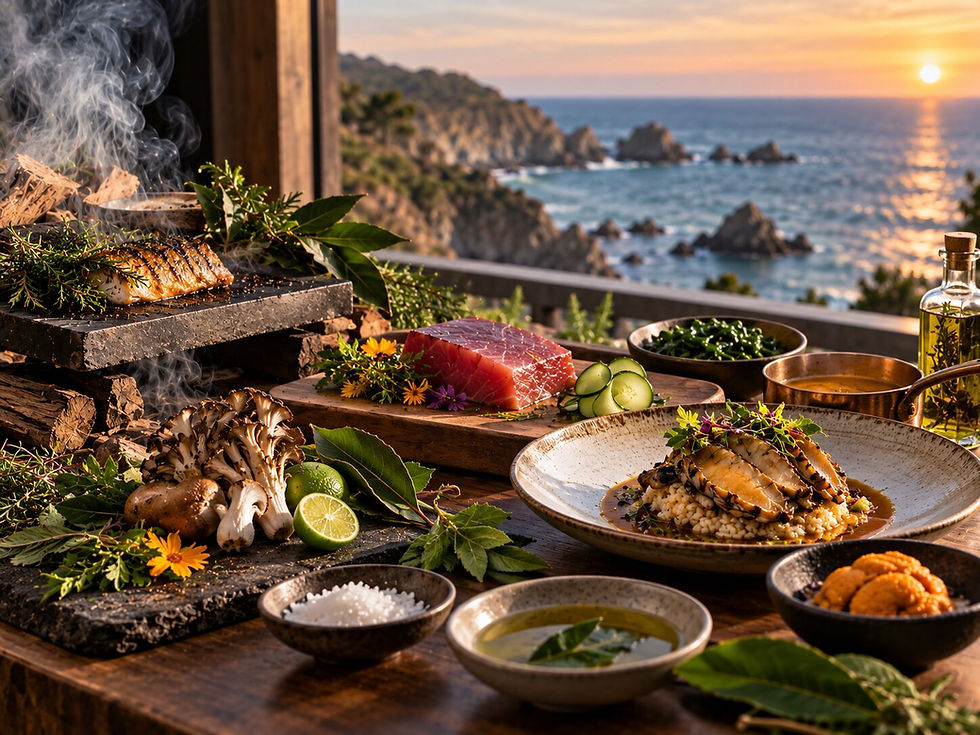
At Harbor House Inn, the experience is tied closely to the Mendocino Coast. Fog, ocean conditions, and inland ecosystems all play a role in what appears on the plate.
We’ve had guests say they didn’t fully register what was happening until halfway through the meal. Then they started noticing patterns they couldn’t quite separate from the environment outside.
That’s where sustainable culinary experiences start to feel different. Not explained. Just experienced.
Who Is Driving Sustainable Dining In The United States?
This shift isn’t coming from one group. It’s coming from many kitchens working in similar directions without always coordinating.
We’ve noticed common traits among culinary leaders in America working in sustainability:
They stay closer to regional sourcing
They build menus around seasons rather than repetition
They maintain long-term supplier relationships
They adjust quickly when ecosystems change
They avoid over-structuring menus too early
Within that group, Michelin Green Star chefs are often referenced, but they are part of a wider movement.
Chef Matthew Kammerer is one example often mentioned in this space. His work at Harbor House Inn reflects how chef-led sustainability can be tied directly to place rather than systemized concepts.
We’ve seen this approach behave differently over time. It doesn’t scale in a typical way. It adapts instead.
Chef Matthew Kammerer and the Harbor House Inn Approach
At Harbor House Inn, sustainability is not separated from cooking. It is part of how decisions get made.
The Importance of Place
The Mendocino Coast is not the background. It actively shapes sourcing decisions.
Some ingredients feel different depending on the coastal conditions that week. That changes planning more than most people expect.
Coastal Ecosystems as Structure
The Pacific Ocean influences temperature, moisture, and availability.
We’ve seen entire prep structures shift because of changes that started offshore.
That’s where coastal ingredient sourcing becomes less about sourcing style and more about reality.
Farm and Forage Practices
Foraging is not treated as expansion. It’s treated carefully.
There are days when the decision is simple. We don’t use it. Not because it isn’t good, but because it doesn’t fit the moment.
That’s a normal part of working this way.
Sustainability as Daily Practice
Sustainability here doesn’t sit outside cooking.
It shows up in planning, sourcing, prep, and sometimes in what doesn’t get used.
That aligns with broader expectations of Michelin Green Star California recognition, even if it isn’t the point of the work.
Beyond The Plate: Sustainability in Hospitality Operations
We’ve noticed guests often think sustainability stops at food. In reality, it extends further into operations.
At properties like Harbor House Inn, environmental systems play a quiet role in the background.
Renewable Energy
Some operations integrate systems linked with providers like Sonoma Clean Power. It’s part of a broader shift toward renewable energy hospitality.
Water Systems
Water usage is carefully managed, especially in coastal environments where resources require attention over time.
EV Infrastructure
Electric vehicle access is becoming more common in remote hospitality spaces. It’s not flashy. It’s practical.
Resource Management
Staffing, procurement, and logistics all contribute to environmental impact, even when guests don’t see it directly.
That’s part of broader sustainable hospitality systems evolving in the industry.
Why Travelers Are Choosing Sustainable Culinary Experiences
We continue to see a change in how guests choose restaurants.
It isn’t only about reputation anymore. It’s about alignment.
Guests ask more questions about:
sourcing
environmental systems
seasonality
connection to place
This is shaping sustainable culinary travel in a real way.
People are not just looking for meals. They are looking for context.
What The Future Of Michelin Green Star Dining Looks Like
There’s no single direction, but patterns are forming.
Regenerative Systems
Some kitchens are starting to think beyond sustainability toward regeneration.
Renewable Energy Integration
Energy systems will likely become more integrated into how restaurants are evaluated.
Localized Models
Menus will continue tightening around the place rather than global sourcing networks.
Accountability Structures
Transparency will likely become standard, not optional.
This is where restaurant environmental practices are heading.
Why This Conversation Around Sustainability Feels Different Today
Guests don’t always ask for “perfect” answers anymore. They ask for honest ones. If something isn’t available, they want to know why. If a dish changes between visits, they don’t assume inconsistency. They assume the environment has changed.
That shift matters more than it sounds. It gives kitchens room to operate with less performance and more reality. At Harbor House Inn, that means we don’t have to explain every adjustment in advance. Some decisions happen in the moment because conditions demand it.
And once guests experience that kind of pacing, they tend to stop looking for fixed expectations.
Conclusion
Michelin Green Star recognition reflects a shift in how restaurants are evaluated, but more importantly, how they operate.
It’s less about awards and more about behavior over time.
Chefs play a central role in that shift because they sit closest to sourcing and daily decision-making.
At Harbor House Inn, Chef Matthew Kammerer demonstrates how sustainability can sit inside everyday cooking rather than alongside it.
We’ve noticed something consistent across guests. They rarely talk about systems when they leave. They talk about moments they didn’t expect. Fog outside the window. A course that changed mid-sequence. A sense that the meal belonged to a specific stretch of coast and nothing else.
That’s usually what stays with them.



Comments