
What Are the Most Popular Michelin-Starred Amuse Bouche Dishes?
Updated: Jun 26
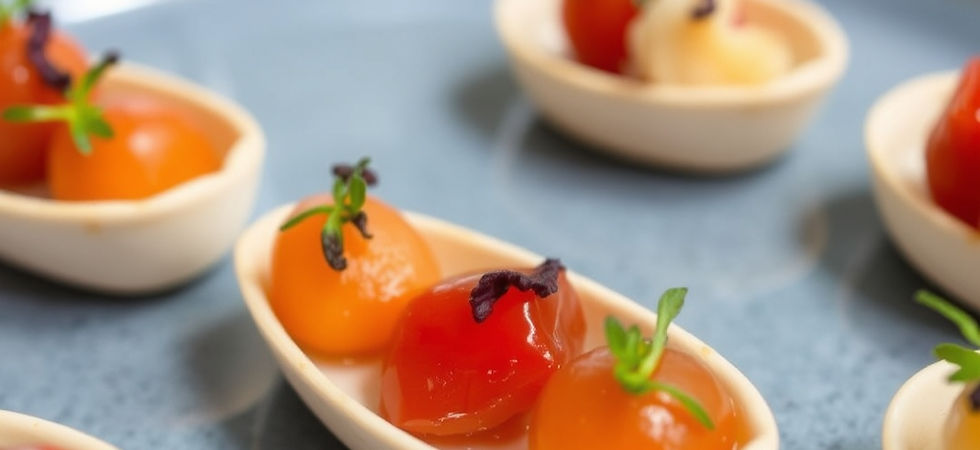
Before the first course of a tasting menu even arrives, a Michelin kitchen has already begun telling its story. The amuse bouche, a small bite sent out at the kitchen's discretion, is where that story begins. Within fine dining amuse bouche culture, this single mouthful often carries more creative weight than its size would suggest, hinting at the flavors, techniques, and philosophy that will guide everything that follows. For diners and travelers exploring tasting menus along the California coast, understanding this small course offers a useful lens into how Michelin kitchens think.
What Is an Amuse Bouche in Michelin Starred Dining
The phrase translates roughly to mouth amuser, and that playful intent is part of the point. Unlike an appetizer, which is chosen from a menu, an amuse bouche is presented without request, often arriving as the first gesture of a Michelin tasting experience. It signals to the guest that the meal ahead will be considered down to the smallest detail. Across luxury tasting menus, this opening bite is frequently used to introduce a key ingredient, technique, or theme that recurs later in the meal, creating a sense of narrative from start to finish.
Famous Michelin-Starred Amuse Bouche Dishes
Some of the famous amuse bouche dishes referenced across the industry started as a single bite served to just a handful of guests. Thomas Keller's Oysters and Pearls is one such example, pairing a warm sabayon of pearl tapioca with oysters and caviar. Decades after its debut, Thomas Keller oysters and pearls remain a benchmark for how a single spoonful can balance temperature, texture, and luxury ingredients.
Equally influential is elBulli liquid olive, created using spherification to encase liquid olive juice within a thin, edible membrane that bursts on the tongue, a technique that helped define an entire era of experimental cuisine. More recently, caviar amuse bouche preparations have become a recurring feature on tasting menus, prized for their briny intensity and minimal embellishment. So too have uni tartlets Michelin style presentations, which highlight the natural sweetness of sea urchin against delicate, crisp pastry. Together, these dishes remain among the best Michelin-starred dishes for their influence on how chefs approach a single bite.
Molecular Gastronomy and Modern Techniques
Many of the dishes above are inseparable from molecular gastronomy amuse bouche techniques, which use tools borrowed from food science to transform familiar ingredients into new textures. Spherification, foams, gels, and the use of liquid nitrogen all fall under this umbrella, and these Michelin culinary techniques continue to influence kitchens well beyond their original settings. Today, modern gastronomy dishes often use these methods with more restraint than in their early years, favoring subtlety over spectacle. The result is a wave of Michelin-inspired dishes that borrow the precision of molecular technique while keeping the focus on flavor and ingredient quality.
Michelin Star Restaurants in California
California is home to one of the most concentrated collections of Michelin star restaurants California has to offer, spanning from urban dining rooms to remote coastal properties. Many of these kitchens are known for Michelin chef signature dishes that change with the seasons, often built around a single ingredient at its peak. Among them, the smaller number of 2 Michelin star restaurants California reflects an especially high standard of consistency, creativity, and service. Across the state, California fine dining restaurants increasingly draw on hyperlocal sourcing, treating the amuse bouche as an early showcase of where, and how, ingredients are grown.
Michelin Dining Near Mendocino
Along the Mendocino Coast, dining options at the Michelin level are notably limited, which makes the presence of any Michelin star restaurants Mendocino travelers can visit particularly significant.
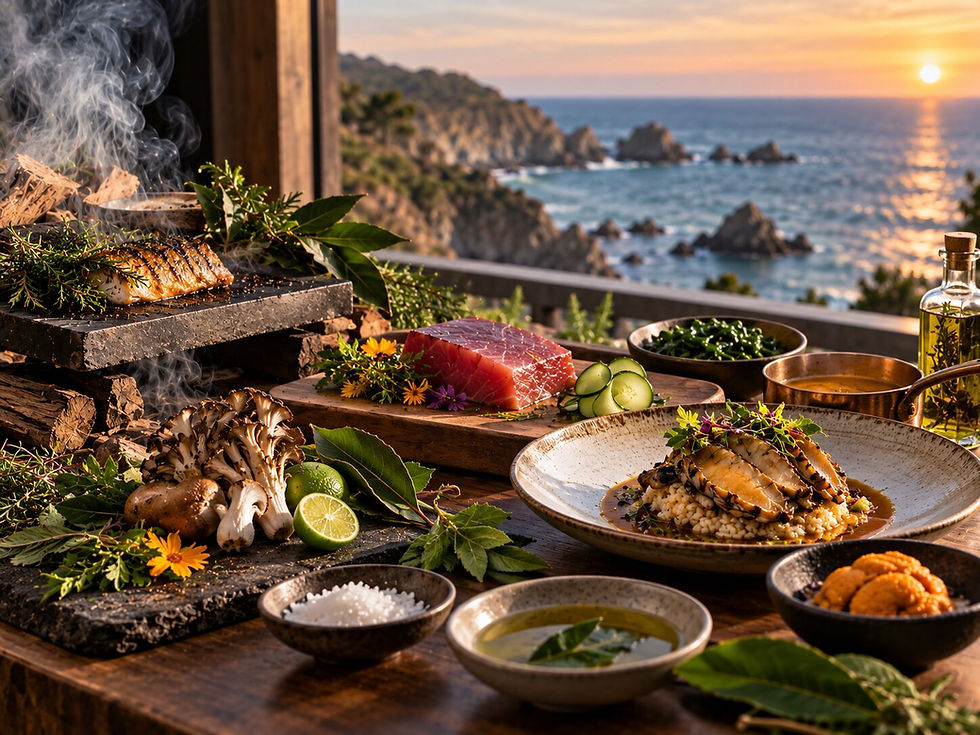
Harbor House Inn, perched above the Pacific in the town of Elk, holds two Michelin Stars and remains the only restaurant of its kind in the immediate area. Under Chef Matthew Kammerer, the kitchen draws its ingredients from its own farm, the surrounding forest, and nearby tidepools, with the amuse bouche often reflecting whatever was foraged or harvested that same morning. For travelers researching Michelin restaurants near Mendocino, Harbor House Inn offers a rare combination of remote setting and exacting culinary standards.
Michelin Green Star Restaurants and Sustainable Dining
Alongside its culinary stars, the Michelin Guide also recognizes restaurants for sustainability through the Green Star. A Michelin Green Star restaurant is evaluated not on cuisine alone but on how responsibly it sources, prepares, and serves food. Harbor House Inn has held this distinction every year since the award was introduced in the United States, supported by practices such as a 320-acre working farm, full reliance on renewable local energy, and a kitchen that reuses water and repurposes ingredients that would otherwise go to waste. These details matter because they shape the amuse bouche just as much as the main courses, often determining which ingredients appear on the plate at all.
Why Amuse Bouche Matters in the Michelin Experience
Beyond its small size, the amuse bouche carries outsized importance because it sets expectations for everything that follows. A confident, well-executed bite signals that the kitchen has thought carefully about pacing, contrast, and storytelling before the main courses even arrive. For guests evaluating luxury restaurant appetizers and tasting menus more broadly, this opening course often becomes a memorable reference point. Many of today's most discussed Michelin tasting menu dishes began as a single experimental bite served to a handful of guests before becoming signatures in their own right, a reminder that even the smallest course can define a Michelin fine dining experience.
FAQs
Q1. What is an amuse bouche in Michelin-starred restaurants?
An amuse bouche is a small bite served at the chef’s discretion before the first course of a tasting menu. Unlike an appetizer, it is not ordered by the guest and is often used to introduce the flavors, techniques, or themes that will appear throughout the meal. In Michelin-starred restaurants, the amuse bouche serves as the kitchen’s first expression of its culinary philosophy.
Q2. Which Michelin restaurant created Oysters and Pearls?
Oysters and Pearls was created by Chef Thomas Keller at The French Laundry. The dish combines oysters, pearl tapioca sabayon, and caviar in a single spoonful and is widely regarded as one of the most influential amuse-bouche creations in modern American fine dining.
Q3. What ingredients are commonly used in Michelin amuse-bouche dishes?
Michelin amuse-bouche dishes often feature ingredients such as caviar, oysters, scallops, uni, truffles, foie gras, and seasonal vegetables. The focus is typically on delivering concentrated flavor, balanced textures, and a memorable presentation within a single bite.
Q4. What is molecular gastronomy in Michelin dining?
Molecular gastronomy refers to culinary techniques that use scientific principles to transform textures and presentations. Methods such as spherification, foams, gels, and liquid nitrogen preparation have become associated with Michelin dining, particularly through dishes like Ferran Adrià’s famous Liquid Olive, which helped shape modern experimental cuisine.
Q5. Are California Michelin restaurants known for creative amuse-bouche?
Yes. Many Michelin-recognized restaurants in California use amuse-bouche as an opportunity to showcase seasonal ingredients, regional products, and innovative culinary techniques. These opening bites often reflect the state’s emphasis on local sourcing and ingredient-driven cuisine.
Q6. What is a Michelin Green Star restaurant?
A Michelin Green Star restaurant is recognized by the Michelin Guide for its commitment to sustainable gastronomy. The distinction highlights restaurants that prioritize responsible sourcing, environmental stewardship, waste reduction, and other practices that support long-term sustainability within the hospitality industry.
Q7. Why do chefs serve amuse-bouche before a tasting menu?
Chefs serve amuse-bouche to establish the tone of the dining experience before the first formal course arrives. The bite may introduce a signature ingredient, demonstrate a technique, or offer insight into the chef’s approach, helping create a sense of continuity throughout the tasting menu.
Q8. How does amuse-bouche reflect a chef's philosophy?
Because the amuse bouche is often the first dish guests receive, it provides a concise expression of a chef’s values and creative vision. Ingredient selection, preparation methods, presentation, and flavor combinations can all communicate a kitchen’s focus on seasonality, sustainability, innovation, or a strong connection to place.
Q9. What two-Michelin-star restaurants are on the California coast?
Harbor House Inn in Elk is the Mendocino Coast's first and only two-Michelin-star restaurant, holding its first star since 2019 and its second since 2021.
Q10. What signature dishes is Harbor House Inn known for?
Hyper-local creations such as sake-poached abalone, sea-lettuce sourdough, grilled wakame ice cream, and salt made by boiling seawater from its own cove.



Comments