

Planning a Special Occasion Dinner Mendocino Coast
Updated: Jun 26
People arrive here for all kinds of reasons. Anniversaries. Birthdays. Engagements. Retirements. Sometimes there's no specific occasion at all. They simply decided this year deserved something different.
What we've noticed over the years is that most guests put serious thought into the restaurant itself and almost no thought into everything surrounding it. They research menus, read reviews, and compare ratings. Then they arrive, sit down, and realize the view is doing something they didn't account for. The pace is slower. The conversation goes somewhere unexpected.
And that distinction shapes everything, from how you should plan the trip to what you'll actually carry home from the evening.
What People Get Wrong Before They Even Book
Popular dates on the Mendocino Coast fill months in advance. Summer weekends, especially. The same applies to holiday weekends and any Saturday between May and October. We've had guests call in early September for a New Year's Eve table and find us already committed. That's not unusual for special occasion restaurants that California travelers plan around.
The other mistake we see is underestimating how much lead time matters for the surrounding logistics. Many guests who come for a single dinner end up wishing they'd stayed longer. We hear that consistently on the way out.
Book the table. Then plan everything else around it.
The Dining Style Question People Forget To Ask
Not every coastal fine dining experience works the same way, and we've found that guests occasionally arrive expecting one thing and encounter another. Some restaurants operate with a traditional menu where you choose from a list of options. Others, including Harbor House Inn, center the evening around a seasonal tasting menu, where the progression of courses is already decided.
Neither approach is better. They're just different.
What matters is that you know what you're walking into. A seasonal tasting menu is a particular kind of evening. It unfolds at its own pace. Courses arrive in a sequence that has a logic behind it. If you come expecting to order from a list, you'll spend the first twenty minutes adjusting to something you weren't prepared for.
We've also found that people who've never done a multi-course tasting menu sometimes worry about the time commitment. A full tasting menu can run two and a half to three hours. That's not a flaw. It's the point. The pace is what allows the evening to become something more than dinner. If you're watching a clock, you're in the wrong mindset.
Read about the format before you arrive. It's a small thing that shapes the entire luxury dining experience.
Why The Coast Changes How An Evening Feels
We see it happen constantly. Guests arrive after the drive up from San Francisco or the Bay Area. They're still in city mode. Phones out, checking messages, running through whatever they need to handle before they can fully relax.
A few hours later, none of that is happening.
The ocean tends to pull people out of that state faster than they expect. The light changes in a particular way in the late afternoon. The sound is constant but not intrusive. There's something about being near water on a dramatic stretch of coastline that does the early work before dinner even starts. We can't create that. It's already here.
That's a large part of why Mendocino Coast fine dining attracts guests from far outside Northern California fine dining circles. The landscape itself is doing something that a restaurant in a metropolitan setting can't replicate. People aren't just booking a meal. They're booking an environment.
We've welcomed guests who told us they hadn't been truly offline in months. Not disconnected by choice. Just hadn't found a place that made them want to put the phone down. This coastline tends to be that place. By the time a first course arrives, most people have forgotten what they were anxious about two hours ago on the highway.
The Food Tastes Different When It Belongs Somewhere
Five years ago, guests rarely asked where the ingredients came from. Now we hear that question almost every evening.
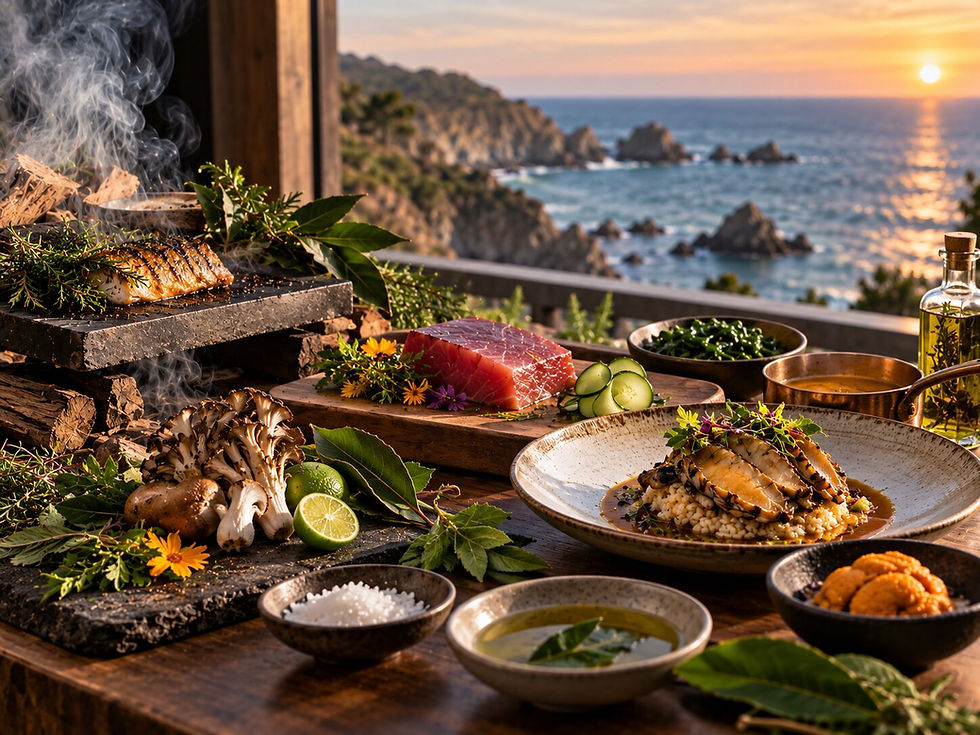
That shift is real. People want to eat food that makes sense where they're eating it. They want the meal to reflect the region, not just be technically accomplished food that could appear anywhere. Under Chef Matthew Kammerer, our approach starts with what's available locally, then builds from there. The ocean influences the menu. Nearby farms shape what's on the plate. What's growing right now determines what you eat.
We've found that guests respond to this more strongly than almost anything else. They don't necessarily remember the name of every component. They remember that the meal felt like it belonged to the place they were visiting. That sense of connection is part of what has positioned Harbor House Inn within Northern California's fine dining as a destination people return to.
Menus also change across seasons. A guest who dines with us in late spring and returns in autumn is eating from a fundamentally different kitchen. Same philosophy, very different ingredients. Some guests plan around this deliberately. We've seen people come back specifically to experience what the menu looks like in winter.
What A Michelin Experience Actually Feels Like
We've heard the concern more times than we can count. People assume that dining at a Michelin-starred restaurant in a California destination will feel stiff. Formal in a way that makes them self-conscious. That they'll feel underdressed or underprepared. That there will be rules they don't know about.
That concern rarely survives the first thirty minutes.
A Michelin dining experience, at its best, isn't about performance. It's about precision applied quietly. As a Michelin Green Star restaurant, we also think about something beyond the plate. The Green Star recognizes a commitment to sustainability, to sourcing that respects the environment we're located in. Guests who care about where food comes from tend to notice this before we explain it. The menu already shows it.
How To Think About The Location Itself
We've noticed that first-time visitors often treat the location as a given. They know Harbor House Inn is on the coast. They've seen the photos. But they underestimate how much the setting will actually influence their experience once they're there.
An oceanfront dining experience isn't the same thing as a restaurant with a nice view. The ocean here isn't decorative. It's present. On certain evenings, you can hear it from the table. The light across the water during the last hour before dark does something to a room that no interior designer can replicate. We've had guests describe arriving feeling like they needed to get through the dinner and leaving feeling like they could have stayed another three hours.
That's not just about food. That's about what happens when a location earns its place in the memory alongside the meal.
People researching fine dining on the California coast often focus heavily on cuisine rankings and awards. Those things matter, and we're proud of ours. But the guests who seem to get the most out of an evening here are usually the ones who came as much for the setting as for the menu. They let the two things work together. They don't rush in from a long drive and sit down immediately. They take a few minutes outside first. They let the place do its work.
The Occasions We See Most Often
Anniversaries are the most common. Guests looking for anniversary dinner ideas in California frequently tell us they want an evening that feels genuinely different from their regular life. Not just a nicer version of what they do at home. Something that requires the trip. Something that has a shape to it because of where it happened.
Birthdays
We've noticed that milestone birthdays attract a particular kind of guest. Someone turning fifty or sixty often wants an experience that marks the moment, not just a dinner. They want to be somewhere that feels considered. The combination of location, food, and pace does that work here in a way that a birthday dinner destination closer to home usually doesn't.
Groups celebrating milestone birthdays also tend to linger longer than any other type of guest. The evening becomes a container for conversation that might not happen anywhere else. We've cleared tables well past when a party expected to leave, and not one of them seemed bothered by it.
Proposals
Guests planning proposals often contact us directly beforehand, which we appreciate. It lets us handle the evening without anything feeling staged. People researching proposal dinner locations in California tend to prioritize three things almost equally: privacy, atmosphere, and a view.
We have all three. And we've learned to make whatever needs to happen, happen without making the other guests aware of it. The evening should feel natural. We've had guests tell us afterward that the proposal felt like it came out of the moment itself, not like it was orchestrated. That's the right outcome.
Romantic Dinners Without A Specific Occasion
Some of the best evenings we host don't have a label. A couple wanted to get away. They found Harbor House Inn and decided the drive was worth it. A romantic dinner on the Mendocino Coast doesn't require a reason. The setting does enough of the work on its own.
We've found that couples who come without a fixed occasion often end up having more open-ended conversations than those who arrive with something to celebrate. There's less structure to the evening. It goes wherever it goes. Those nights sometimes produce the most memorable stories when guests come back.
The Experience Starts Before You Sit Down
We think about the overall experience differently than most people do when they first book.
The evening doesn't begin when the first course arrives. For most guests, it starts during the walk outside before dinner. The light is usually doing something interesting in the late afternoon. People slow down before they've eaten a single bite. They're already in a different state than they were two hours ago on the highway.
That transition matters. It's what creates the conditions for an evening that feels different from ordinary life. The meal continues what the landscape already started. We've seen guests who arrived stressed and distracted become completely different people by the time the third course was on the table. We didn't do that. The place did.
For guests staying overnight, the effect compounds. Waking up to this coastline the morning after a special event dining experience is a different thing than driving back to the city at ten o'clock. If you have the flexibility, staying adds something hard to describe until you've experienced it. The celebration doesn't end with the last course. It extends into the next morning.
We've had guests celebrating engagements, retirements, major anniversaries, and personal milestones that mattered deeply to them but didn't come with a standard name. Years later, some of them return and ask for the same table.
FAQs
What makes a special-occasion dinner memorable?
A special-occasion dinner becomes memorable when the food, the setting, and the pace work together rather than competing. At Harbor House Inn on the Mendocino Coast, the seasonal tasting menu unfolds over two and a half to three hours, and that slower rhythm is what turns dinner into an experience guests carry home. In our years of hosting celebrations, the most memorable evenings are the ones where guests let the oceanfront location work alongside the meal instead of rushing in and sitting straight down.
Why is the Mendocino Coast a popular dining destination?
The Mendocino Coast is a popular fine dining destination because the landscape creates something a city restaurant can't replicate. Guests arrive after the drive from San Francisco or the Bay Area still in city mode, and the ocean tends to pull them out of it faster than they expect the late-afternoon light, the constant sound of the water, the quiet. By the time the first course arrives, most people have set the phone down. At Harbor House Inn, guests aren't only booking a meal; they're booking an environment.
How far in advance should I book a special-occasion dinner?
Book your special-occasion dinner on the Mendocino Coast as early as possible, because popular dates fill months in advance summer weekends especially, along with holiday weekends and most Saturdays between May and October. We've had guests call in early September for a New Year's Eve table and find us already committed. Reservations are required for all offerings at Harbor House Inn, so we recommend securing the table first and planning everything else around it. Guests who book the inn 60 days or more ahead also receive early access to restaurant reservations before they open to the public.
What is a Michelin dining experience like?
A Michelin dining experience is far less formal than most guests expect. Many people assume a Michelin-starred restaurant will feel stiff, or that there are rules they don't know and that concern rarely survives the first thirty minutes. At Harbor House Inn, a Two MICHELIN Star restaurant on the California coast, the experience isn't about performance; it's precision applied quietly. As a MICHELIN Green Star restaurant, we also think beyond the plate, with a commitment to sustainability and to sourcing that respects the environment around us.
Why do guests choose Harbor House Inn for celebrations?
Guests choose Harbor House Inn for celebrations because its Two MICHELIN Star and MICHELIN Green Star restaurant pairs hyper-local cuisine with a dramatic oceanfront setting in Elk, California. The kitchen, led by Chef Matthew Kammerer, starts with what's available locally, so the meal feels like it belongs to the place you're visiting. On certain evenings you can hear the water from the table. Guests staying at the inn also receive preferred restaurant reservations through our concierge. We host anniversaries, milestone birthdays, proposals, engagements, retirements, and many evenings with no particular label at all.
Who is Chef Matthew Kammerer?
Chef Matthew Kammerer is the chef behind Harbor House Inn in Elk, California, which reopened under his helm in 2018 and has since earned Two MICHELIN Stars and a MICHELIN Green Star. His cooking is intensely local: the ocean influences the menu, nearby farms shape what's on the plate, and what's growing right now determines what you eat. In 2025, Harbor House Inn was recognized as a James Beard Award semifinalist for Outstanding Hospitality.
Is Harbor House Inn suitable for anniversaries and proposals?
Yes, Harbor House Inn is well suited to both anniversaries and proposals. Anniversaries are the most common occasion we host, and proposals are among the most memorable. For a proposal, we appreciate when guests contact us directly beforehand; it lets us handle the evening without anything feeling staged. Couples planning a proposal dinner in California tend to prioritize privacy, atmosphere, and a view, and our Mendocino Coast setting offers all three while keeping the moment natural and discreet.
What should guests wear to a Michelin-recognized restaurant?
At Harbor House Inn, jackets and ties are not required, so guests can feel comfortable throughout the evening. We do ask that guests refrain from t-shirts, shorts, flip-flops, athletic wear, and hats. Because scent and taste are closely linked, we also kindly ask guests to avoid wearing fragrances in our intimate oceanview dining room. The aim is a relaxed but considered dress code that fits a Michelin-recognized dining experience.
Is it worth staying overnight after a destination dinner?
Staying overnight after a destination dinner is well worth it for guests with the flexibility. Waking up to the Mendocino coastline the morning after is a very different thing than driving back to the city at ten o'clock the celebration extends into the next morning rather than ending with the last course. Each nightly stay at Harbor House Inn includes a lavish breakfast, access to our private cove, and cozy accommodations across six main-house rooms and five standalone cottages.
What makes Harbor House Inn different from traditional fine dining restaurants?
Harbor House Inn differs from traditional fine dining restaurants because it centers each evening around a seasonal tasting menu rather than an à la carte list, so the progression of courses is already decided and unfolds at its own pace. The menu is hyper-local and constantly evolving a guest who dines in late spring and returns in autumn eats from a fundamentally different kitchen: same philosophy, very different ingredients. Combined with the oceanfront setting on the Mendocino Coast, it makes for an evening shaped by where it happens, not just what's on the plate.



Comments