

Michelin Star Amuse Bouche Recipes for Elegant Fine Dining Inspiration
Updated: Jun 26
Michelin Star Amuse Bouche Recipes for Elegant Fine Dining Inspiration
In the world of tasting menus, the first bite often lingers longest in memory. Michelin star amuse bouche recipes are built around exactly that moment, a single considered gesture that introduces a chef's voice before the meal truly begins. Along California's coastline, where seasonal abundance meets technical precision, these small creations have become an art form of their own, offered as a gift from the kitchen rather than an item on the menu.
What Is an Amuse Bouche in Fine Dining
An amuse bouche, literally a mouth amuser, differs from a starter in both scale and purpose. While appetizers are ordered from a menu and often substantial, an amuse bouche is offered freely, typically a single bite that arrives unannounced. In the context of Michelin amuse bouche recipes, this distinction matters, since the dish exists purely to delight, to surprise, and to hint at the kitchen's philosophy. Within a tasting menu, it sets the tone for everything that follows. Many of today's most memorable fine dining amuse bouche recipes draw on whatever a coastal kitchen has gathered that morning, whether from tidepools, forest, or farm, rather than a fixed list of ingredients.
Hallmarks of Michelin-Style Appetizers
What separates Michelin-style appetizers from everyday small plates is restraint paired with intensity. Each element earns its place, and nothing is included for decoration alone. Many gourmet amuse bouche recipes rely on concentrated flavor, built from reductions, purees, or cures that take hours to prepare for a result eaten in seconds. Acidity, salt, and texture are balanced with precision, and temperature is often used as a tool, pairing something warm against something cold within the same bite. The goal is coherence, where every component tastes inevitable once combined.
Seafood Inspired Bites
Coastal kitchens naturally lean toward the ocean for inspiration, and seafood remains one of the richest categories for seafood amuse bouche recipes. A classic example is the tuna tartare miso cone, where finely diced raw tuna is folded with citrus and a touch of sesame, then tucked into a crisp, savory cone for textural contrast. Equally elegant is seared scallop parsnip puree, where the natural sweetness of a quickly seared scallop sits atop a silky puree, finished with a delicate crumb or herb oil. Both dishes rely on freshness above all else, letting the ingredient remain the focus rather than heavy sauces or elaborate garnish.
Vegetarian and Plant Forward Creations
Vegetable-based courses have moved firmly into the spotlight, and vegetarian amuse bouche ideas now receive the same level of craft once reserved for meat and seafood. Sweetcorn panna cotta recipe concepts showcase this shift well, with a lightly set, savory custard made from sweet corn, often paired with a herb oil or smoked salt to deepen the flavor. A savory panna cotta amuse bouche can take many forms beyond corn, including pea, mushroom, or roasted pepper bases.
Another standout is beetroot horseradish foam, where earthy beetroot puree is topped with a light, peppery foam, offering a striking color contrast as well as a balance between sweetness and heat.
Meat and Foie Gras Inspirations
For richer courses, foie gras remains a touchstone of luxury. A foie gras bonbon recipe typically involves setting smooth foie gras mousse into a small sphere, then coating it in a thin chocolate or cocoa shell, creating a dramatic contrast between savory and sweet as it is bitten. This kind of inventive pairing appears throughout many Michelin chef recipes, where unexpected combinations are used sparingly and with purpose rather than for shock value. Even a small bite like this can carry the weight of an entire course, hinting at the richness still to come.
Presentation and Plating Techniques
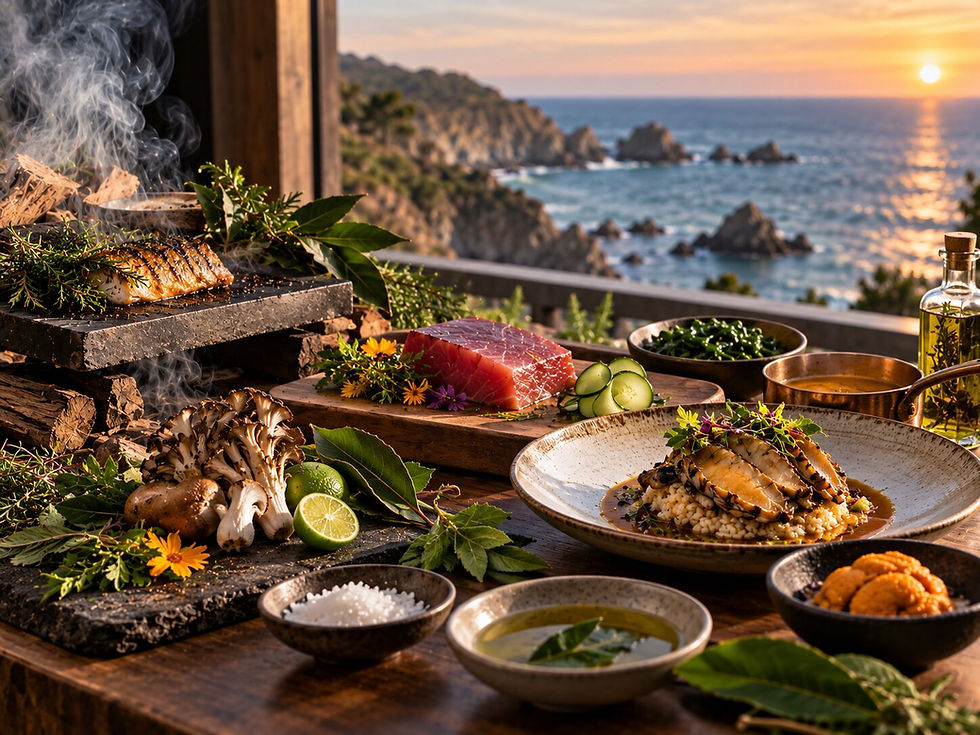
Presentation is inseparable from flavor in this category, and many amuse bouche plating ideas draw on miniature versions of classic serviceware, including spoons, shot glasses, slate tiles, or hollowed shells. Strong gourmet appetizer presentation often uses height, negative space, and a single point of color to draw the eye before the first bite is taken. Elegant appetizer ideas frequently borrow from nature itself, using foraged leaves, edible flowers, or shells as both garnish and vessel. Among bite-sized fine dining recipes, this approach matters most for delicate proteins. Michelin-style seafood appetizers in particular benefit from restraint, since ingredients like uni or scallop are easily overwhelmed by anything too elaborate.
Molecular Gastronomy Influences
Some of the most memorable molecular gastronomy appetizers rely on techniques borrowed from food science, including foams created with lecithin, gels set with agar, or spherified liquids that burst on contact with the tongue. These methods are not used for novelty alone. When applied with restraint, they allow a chef to present a familiar flavor in an entirely new texture. This spirit of experimentation is part of what defines modern fine dining recipes today, where technique serves the ingredient rather than overshadowing it.
Bringing Michelin-Inspired Recipes Home
For home cooks, Michelin-inspired recipes do not require industrial equipment to succeed. Start with one excellent ingredient, keep the portion small, and focus on a single contrast, whether that is texture, temperature, or flavor. Many luxury amuse bouche ideas translate well to a dinner party simply by scaling down a familiar dish into a single elegant spoonful. On the Mendocino Coast, Harbor House Inn's Two Michelin Star restaurant, led by Chef Matthew Kammerer, builds its Michelin tasting menu recipes around exactly this philosophy, drawing on ingredients from its own farm, the surrounding forest, and nearby tidepools, presented with the same care whether the dish is the first bite of the evening or the last.
FAQs
Q1. What are Michelin-star amuse bouche recipes?
They are refined one-bite dishes designed to showcase creativity, flavor, and presentation.
Q2. What ingredients are commonly used in Michelin amuse bouche recipes?
Seafood, foie gras, caviar, seasonal vegetables, herbs, and gourmet sauces.
Q3. Are amuse bouche dishes difficult to prepare?
Many use advanced techniques, but simple elegant versions can also be created at home.
Q4. What makes Michelin amuse bouche different from appetizers?
Amuse bouche are smaller, more artistic, and designed as complimentary tasting experiences.
Q5. What presentation styles are common in Michelin amuse bouche?
Mini spoons, cones, tartlets, glassware, foams, and layered textures are commonly used.
Q6. Can vegetarian amuse bouche be Michelin-level?
Yes, many Michelin chefs create highly artistic vegetarian one-bite dishes using seasonal ingredients.
Q7. Where can I experience Michelin-level amuse-bouche in California?
Harbor House Inn, a two-Michelin-star restaurant in Elk, opens its tasting menu with kitchen-chosen bites built from foraged and farm-grown ingredients, set by Chef Matthew Kammerer.
Q8. Who is the chef behind Harbor House Inn?
Executive Chef Matthew Kammerer, a Food & Wine Best New Chef and multiple James Beard Award nominee, who reopened Harbor House Inn in 2018 and earned it two Michelin stars.



Comments