

How Harbor House Inn Balances Historic Charm with Modern Luxury
Updated: Aug 6
We’ve welcomed guests to this Mendocino Coast bluff long enough to watch tastes flip. A decade ago, people wanted glass towers and minimalist everything. Now they want the opposite. A building with bones. A story in the walls. Somewhere that existed before them and will exist after.
That shift has put historic boutique hotels at the center of luxury travel. Not because they’re old. Because they’re real. Harbor House Inn has stood here since 1916. We didn’t tear it down. We restored it. Quietly. The redwood panels still hold the grain of the original trees. The windows still frame the same Pacific. But inside, the experience is completely modern. Michelin-recognized dining. Renewable energy. A kitchen that cooks with what the land gives. That balance is what guests now expect. History doesn’t mean roughing it. It means layering comfort into something that already has soul.
What Defines a Historic Luxury Hotel Today?
A historic luxury hotel preserves its original architecture and heritage while offering contemporary comfort. Not a museum. A living place.
Authenticity is the key. Heritage hospitality means the building shapes the stay. The creak of a floorboard, the patina of old wood. Those aren’t flaws. They’re texture. Historic preservation keeps what matters while upgrading what needs to change. Guests want character, not uniformity. They don’t want a room that could be anywhere. They want a room that belongs exactly where it is.
Travelers increasingly choose restored properties because they’re tired of sameness. A boutique luxury inn like ours offers a sense of place no new build can replicate. The Mendocino Coast is in the walls, the view, the salt air. You feel it right away. That’s what modern luxury hospitality demands. Not gold taps. A feeling of arrival.
A Century of History on the Mendocino Coast
The inn was built in 1916 by the Goodyear Redwood Company. The same craftsmen who harvested the ancient redwoods used that timber to build this place. The walls are literally made of the land. That connection has never broken.
For decades it operated in various forms. Time took its toll. In 2018, under Edmund Jin and Eva Lu, the inn reopened after a meticulous historic hotel restoration. The goal wasn’t to erase the past. It was to reveal it. Original redwood paneling was preserved. The stone fireplace still anchors the main room. The footprint stayed the same. Just eleven guest rooms. The intimate scale it always had.
The Mendocino Coast shaped the inn from the start and still shapes every stay. The Pacific is constant. Fog rolls in and out. Redwoods stand behind, ancient and silent. You’re not just in a hotel. You’re inside a piece of California history that’s very much alive.
Preserving Historic Character Through Thoughtful Restoration
We didn’t gut the place. We didn’t chase trends. The restoration was about listening to the building. Original historic architecture was respected. The redwood craftsmanship that defined the inn in 1916 still defines it today.
Historic preservation means restraint. Knowing what to touch and what to leave alone. Timeless design, not trendy. No flashy fixtures. Just honest materials. The redwood walls were maintained, not replaced. Windows still open to the sea. The sense of continuity is deliberate.
Balancing preservation with comfort takes care. We added modern heating, renewable energy, and updated bathrooms. But nothing screams renovation. Guests sense the building’s age without feeling like they’re roughing it. That’s the line. Heritage hotel character without discomfort. Quiet luxury that honors the past while living fully in the present through thoughtful restoration.
Modern Luxury Is Defined by Experience, Not Excess
Luxury has changed. We’ve watched it. Guests don’t ask about thread count anymore. They ask if they can walk the cove before breakfast. They want privacy, stillness, a connection to the landscape.
Quiet luxury is the term that fits. No velvet ropes. Just careful attention. Personalized hospitality means we remember your name, your preferences, the anniversary you mentioned. With only eleven rooms, that’s possible. The private ocean cove below the inn is yours alone. No public access. Walkable gardens blend into wild coastal scrub. The oceanfront setting does the work. You sit by the window, watch the fog, and time slows.
That emotional connection is what defines luxury now. Not more. Something genuine. History, nature, privacy, care. Those are the amenities that matter. That’s why a luxury California getaway and luxury coastal retreat like ours resonates. You leave feeling restored, not impressed.
Michelin Dining Completes the Experience
Chef Matthew Kammerer runs our kitchen. Two Michelin Stars. A Michelin Green Star. But the numbers don’t explain how integrated dining feels here.
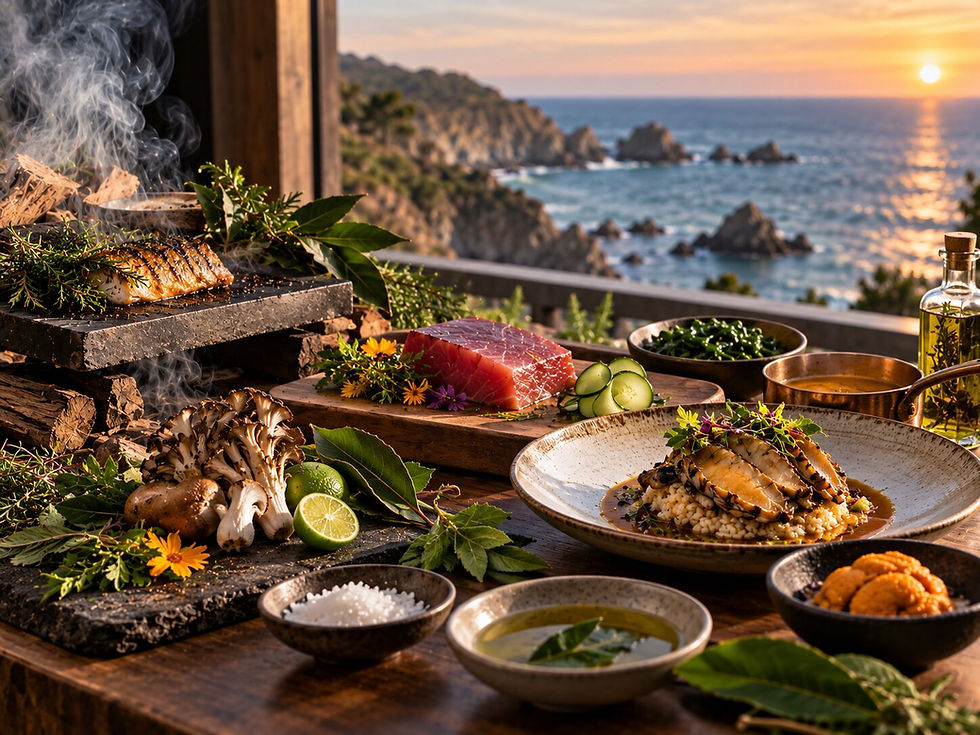
The restaurant seats just twenty. Most face the Pacific. Chef Kammerer’s philosophy is hyper-local. Ingredients from our ranch, the forest, the tidepools below. The seasonal tasting menu shifts with what’s available. Fire, steam, and smoke are the techniques. No heavy sauces. Just ingredients speaking clearly.
The dining experience doesn’t feel separate from the historic inn. You eat in the same building where guests have dined for a century. The view is the same. The food tastes like the Mendocino Coast because it comes from it. That’s not a concept. It’s what happens when a kitchen commits to its location.
What Are the Top-Rated Restaurants in California Right Now?
California’s most respected restaurants are recognized for culinary craftsmanship, seasonal ingredients, outstanding hospitality, and a strong sense of place. Many hold Michelin distinctions through their commitment to quality and sustainability.
Harbor House Inn’s restaurant reflects all of this. Chef Matthew Kammerer’s cooking has earned Two Michelin Stars, a Green Star, and a Michelin Key. A recognition that extends beyond the plate to the entire hospitality experience. That combination is rare. It means excellence isn’t just on the menu. It’s in the setting, the service, the way the whole property works together.
The 20-seat dining room overlooks the Pacific. The tasting menu is built around hyper-local ingredients from the Harbor House Inn Ranch, the forests, and the tidepools. Chef Kammerer and his team harvest daily. The menu shifts with the seasons. Fire, steam, and smoke anchor the cooking. The result is a dining experience inseparable from the historic boutique hotel itself. Architecture, hospitality, sustainability, and cuisine create one cohesive whole. Guests come for a complete expression of this place. That’s what defines the most respected restaurants right now. Integrity, not just skill.
Michelin Restaurants in the United States
Michelin recognition remains one of gastronomy’s highest honors. The Guide evaluates ingredient quality, technique, consistency, and personality. A Green Star honors outstanding sustainable gastronomy.
Harbor House Inn embodies these qualities. Chef Kammerer’s ingredient-driven philosophy is built on restraint. He cooks with what the Mendocino Coast provides, not what’s ordered from a catalog. The ranch supplies produce. Forests and tidepools contribute wild ingredients. Everything is seasonal. Nothing is forced.
The Michelin Guide recognized this with Two Stars and a Green Star. It confirms that world-class dining doesn’t need imported luxury or theatrical presentation. It needs listening to the land, cooking with precision, and creating an experience that can’t be replicated. The historic inn provides the setting. The coast provides the ingredients. Chef Kammerer provides the craft. That’s Michelin recognition here.
Sustainability Preserves More Than History
Protecting a historic building means nothing if you ignore the landscape around it. Sustainability here is stewardship. The coast and forests are part of the same heritage as the 1916 redwood walls.
We run on 100% renewable local energy via Sonoma Clean Power. EV charging stations. Water filtration eliminates single-use plastic. The kitchen reuses water, upcycles fryer oil, and repurposes butter solids. Trimmings become stocks. Shells become compost. The Harbor House Inn Ranch supplies produce grown on-site. We also remove invasive purple sea urchins to restore kelp forests. The uni goes to the kitchen. Conservation becomes an ingredient.
The Green Star recognized these practices. They’re daily habits, not a program. Stewardship means leaving the land as you found it. That’s the same impulse that preserved the redwood paneling. Sustainability isn’t marketing. It’s an extension of our commitment to place.
Why Historic Boutique Inns Represent the Future of Quiet Luxury
Smaller scale is where hospitality is headed. Travelers reject vast, impersonal resorts. They want discoveries. Historic architecture, personalized hospitality, a slower rhythm.
Here, scale allows genuine connection. Eleven rooms mean we know our guests. Privacy is built in. The cove is private. The gardens are quiet. Craft is visible everywhere. Slow travel fits naturally. Guests stay longer, explore the coast, eat meals that change daily with the harvest. No rush.
Quiet luxury values authenticity, craftsmanship, and a deep sense of place. Historic properties have all that inherently. They don’t need to manufacture a story. The story is in the walls. The future of luxury isn’t about adding more. It’s about preserving what’s real.
Harbor House Inn as a Modern Expression of Heritage Hospitality
We didn’t set out to be a case study. The inn just evolved in a way that aligned with what guests now want. Heritage hospitality means honoring the past while inhabiting the present.
The 1916 bones are intact. Redwood craftsmanship still defines the experience. The Mendocino Coast remains the central character. Layered onto that history: personalized hospitality, Michelin-recognized dining, sustainability, a private cove, gardens, an oceanfront setting.
This combination is rare. Historic preservation doesn’t usually coexist with Two Michelin Stars and a Green Star. But here they reinforce each other. Architecture, food, energy, service. All rooted in one place. That’s heritage hospitality. Not a museum. A living inn that happens to have been doing this for over a hundred years.
Historic charm and modern luxury hospitality aren’t opposites. When history is preserved with care and hospitality is rooted in authenticity, the result feels timeless, not nostalgic. Harbor House Inn reflects that balance through its century-old heritage, thoughtful restoration, Michelin-recognized dining, sustainable stewardship, and enduring connection to the Mendocino Coast. It’s not about choosing between past and present. It’s about letting them coexist so seamlessly that guests feel both. That’s the quiet luxury we believe in.
Frequently Asked Questions
What is a historic luxury hotel?
A property preserving original architecture and heritage while offering contemporary comfort and authentic experiences.
When was Harbor House Inn built?
1916, by the Goodyear Redwood Company, using local redwood.
How does Harbor House Inn balance history with modern luxury?
Through thoughtful restoration respecting craftsmanship while adding renewable energy, modern amenities, and Michelin-recognized dining.
What makes Harbor House Inn different from other historic hotels?
Intimate scale, private cove, hyper-local cuisine, two Michelin Stars, Green Star, and deep connection to the Mendocino Coast.
What is heritage hospitality?
Honoring a property's history and architecture while delivering exceptional, personalized guest experiences.
Does Harbor House Inn have a Michelin-starred restaurant?
Yes. Chef Matthew Kammerer's restaurant holds Two Michelin Stars and a Green Star.
What is a Michelin Key?
A recognition evaluating the overall hospitality experience, not just cuisine. Harbor House Inn holds a Michelin Key.
How does sustainability contribute to the experience?
Renewable energy, on-site ranch, water filtration, waste reduction, and conservation efforts add integrity to the stay.
Why do travelers choose historic boutique hotels?
For authenticity, character, personalized service, privacy, and genuine connection to place.
Where is Harbor House Inn located?
On the Mendocino Coast in Elk, California, overlooking the Pacific Ocean.



Comments