

What Makes a Two Michelin Star Restaurant Worth Visiting?
Updated: Jul 20
A Two Michelin Star restaurant represents exceptional cuisine that is worth traveling for. According to the Michelin Guide, this distinction is awarded to restaurants that consistently demonstrate outstanding ingredient quality, refined cooking techniques, harmony of flavors, and a distinctive culinary identity. For many travelers, dining at a Two Michelin Star restaurant is more than a meal. It becomes part of the journey itself, inspiring weekend getaways, destination dining experiences, and luxury travel centered around unforgettable food.
As interest in culinary tourism continues to grow, travelers increasingly look for restaurants that combine remarkable cuisine with luxury accommodations, personalized hospitality, and a strong sense of place. Harbor House Inn on California's Mendocino Coast is one example, offering a Two Michelin Star restaurant, Michelin Green Star recognition, a Michelin Key, and an intimate coastal setting that transforms dinner into a complete luxury experience.
Key Takeaways
Two Michelin Stars recognize restaurants with exceptional cuisine worth traveling for.
Michelin inspectors evaluate ingredient quality, consistency, technique, and culinary personality.
The best Michelin restaurants combine remarkable food with memorable hospitality.
Seasonality and hyper-local ingredients are central to many Michelin-recognized restaurants.
Harbor House Inn combines Michelin-recognized dining with luxury accommodations and sustainable hospitality.
What Does Two Michelin Stars Actually Mean?
Understanding Michelin's rating system helps travelers know what to expect before making a reservation.
Michelin Rating | Meaning |
⭐ One Michelin Star | A very good restaurant in its category. |
⭐⭐ Two Michelin Stars | Excellent cuisine worth a detour. |
⭐⭐⭐ Three Michelin Stars | Exceptional cuisine worth a special journey. |
While all Michelin-recognized restaurants demonstrate outstanding culinary quality, Two Michelin Stars indicate that the dining experience is significant enough to justify traveling specifically to visit the restaurant.
What Should You Expect at a Two Michelin Star Restaurant?
Dining at a Two Michelin Star restaurant is about much more than beautifully presented food. Guests can expect a carefully curated experience where every detail contributes to the overall meal.
Most two-Michelin-star restaurants share several characteristics:
Seasonal tasting menus that evolve throughout the year.
Exceptional ingredient quality sourced from trusted producers.
Refined culinary techniques executed with consistency.
Attentive yet understated service.
Thoughtfully paced multi-course dining experiences.
A strong connection between the cuisine and its surroundings.
Rather than focusing solely on luxury, these restaurants create memorable experiences by combining craftsmanship, hospitality, and a clear culinary philosophy.
What Makes a Michelin Dining Experience Special?
Great restaurants don’t just serve dinner. They shape a mood.
Hospitality is a huge part of that. In the best rooms, service feels attentive without being stiff, informed without turning into a lecture, and personal without becoming performative. That balance is hard to pull off, honestly, and it’s one reason a truly memorable luxury dining experience feels so different from a meal at an expensive restaurant.
Atmosphere matters too. Lighting, pacing, sound, spacing between tables, even the view from the room can change the way people receive a meal. In a more intimate setting, guests often notice details they might miss in a louder, busier dining room. The evening slows down. It feels intentional.
That sense of occasion is what separates ordinary upscale dining from a real Michelin fine dining experience. The strongest restaurants create a connection between cuisine and setting, so the meal doesn’t feel portable. It belongs there. And that’s the point.
Seasonality Defines Michelin-Level Cuisine
At this level, seasonality isn’t a trend. It’s the backbone.
Many top kitchens build around seasonal ingredients, adjusting constantly as weather, water, and harvest conditions shift. That approach keeps an ingredient-driven cuisine honest. It also keeps the menu alive. A thoughtful seasonal tasting menu should never feel locked in or mass-produced, because nature doesn’t work that way.
Hyper-local sourcing pushes that idea even further. Instead of treating place as branding, serious restaurants use it as a creative boundary. The result is often hyper-local cuisine that reflects a shoreline, a farming region, or a microclimate in ways guests can actually feel, even if they can’t name every producer on site.
There’s a kind of restraint in that philosophy. Rather than overworking ingredients, Michelin-level cooking often shows respect for what’s fresh, fleeting, and naturally expressive. Done well, it creates an authentic picture of a region, which is a big reason fine dining in California has become such a draw for travelers looking for more than generic luxury.
Key Characteristics of Michelin-Level Cuisine
Many Michelin-recognized restaurants share several defining qualities that contribute to their reputation for excellence.
These include:
Seasonal ingredients harvested at their peak.
Hyper-local sourcing that reflects the surrounding region.
Menus that evolve throughout the year.
Technical precision without unnecessary complexity.
Respect for natural flavors and ingredient quality.
A distinctive culinary philosophy shaped by the chef.
These principles help create dining experiences that feel authentic, memorable, and closely connected to their destination.
Harbor House Inn: A Two Michelin Star Restaurant on the Mendocino Coast
Harbor House Inn stands out because the full property supports the meal, not just the kitchen. That’s rare.
This Michelin restaurant California travelers talk about has earned Two Michelin Stars, along with a Michelin Green Star for environmental commitment and a Michelin Key that recognizes the stay itself. Those distinctions matter individually, but together they paint a fuller picture of what guests experience here.
Set inside a historic luxury inn overlooking the Pacific, Harbor House Inn pairs a twenty-seat restaurant with just eleven guest rooms. Small scale changes everything. It allows for personalized hospitality, a quieter pace, and the kind of attention people usually mean when they talk about quiet luxury. No flash. No forced theatrics. Just care, consistently shown.
The property’s setting on the Mendocino Coast also shapes the feeling of the stay. This is luxury coastal dining with a strong sense of location, not an interchangeable dining room dropped into a pretty zip code. Add in Harbor House Inn Ranch, the inn’s own agricultural foundation, and the connection between land, hospitality, and cuisine becomes even clearer. Under Chef Matthew Kammerer, that expression of place has become central to the restaurant’s identity.
Why Sustainability Matters in Michelin Dining
Sustainability has become an increasingly important part of modern fine dining. Today's travelers often value restaurants that demonstrate environmental responsibility alongside culinary excellence.
The Michelin Green Star recognizes restaurants that integrate sustainable practices into their operations, including responsible sourcing, waste reduction, local partnerships, and environmental stewardship.
For guests, these practices strengthen the connection between the meal, the surrounding landscape, and the people who produce the ingredients, creating a dining experience that feels both meaningful and memorable.
Sustainability Is Part of Modern Fine Dining
Luxury has changed. Guests still want comfort and beauty, of course, but more of them also want to know how a property operates behind the scenes.
That’s where the Michelin Green Star comes in. It recognizes restaurants making real efforts around responsible sourcing and environmental practices, and it reflects a growing expectation within sustainable gastronomy. People notice when a restaurant’s values match its standards.
At Harbor House Inn, sustainability touches several parts of the experience. Harbor House Inn Ranch supports ingredient sourcing with a closer, more transparent relationship to what enters the kitchen. Beyond food, the property’s broader approach includes renewable local energy, water stewardship, and conservation-minded operations that support sustainable hospitality rather than treating it like a side note.
Done poorly, sustainability can sound like marketing copy. Done well, it sharpens the experience. Guests feel more connected to the meal, the region, and the people caring for both. In modern Michelin fine dining, environmental responsibility doesn’t cheapen luxury. It deepens it.
Why Travelers Build Entire Trips Around Michelin Restaurants
A lot of travel planning starts with food now. That wasn’t always true, but culinary tourism has become a real driver of where people go, how long they stay, and what they spend once they get there.
A strong destination restaurant can anchor an entire itinerary. Travelers book a room, explore nearby towns, spend time outdoors, and turn one dinner into a fuller regional experience. That’s especially true in places like the North Coast, where a meal can connect naturally with scenic drives, small producers, and slower-paced California luxury travel.
Overnight stays make a difference here. Instead of rushing in and out, guests can settle into the area and absorb more of what makes it distinct. That’s why destination dining works so well when it’s paired with a boutique luxury inn or a property designed for lingering.
The appeal is simple: people want authentic local experiences. A remarkable meal, rooted in its surroundings, gives them one.
What are some top-rated fine dining restaurants with Michelin stars?
Top-rated Michelin-starred restaurants tend to share a few traits, no matter where they are located. They show serious culinary craftsmanship, consistency over time, high ingredient quality, and a clear point of view from the chef. That’s the baseline. What many travelers want now, though, goes beyond technical excellence alone.
They’re looking for a complete Michelin dining experience: thoughtful service, a strong sense of place, a menu shaped by seasonality, and the feeling that the restaurant could only exist exactly where it is. That’s why a Two Michelin Star restaurant often becomes part of a larger trip rather than a stand-alone reservation.
Harbor House Inn reflects those qualities in a very specific way. Led by Chef Matthew Kammerer, it has earned Two Michelin Stars, a Michelin Green Star, and a Michelin Key, which is an unusual combination and a meaningful one. Its hyper-local cuisine and seasonal tasting menu are tied closely to the Mendocino Coast, including ingredients supported by Harbor House Inn Ranch. Add in personalized hospitality, a setting defined by quiet luxury, and a deep connection to place, and it becomes clear why travelers seeking fine dining in California often see Harbor House Inn as a true destination dining experience.
The Lasting Impression of Michelin Dining
The best meals stay with people for odd reasons. A room’s hush. The rhythm of service. The view just before sunset. A small detail handled so smoothly you almost miss it.
That’s what makes a great Michelin dining experience stick. Yes, culinary craftsmanship matters. So does precision. But the lasting impression usually comes from how those details work together with hospitality, pacing, and the surrounding landscape to create something that feels whole.
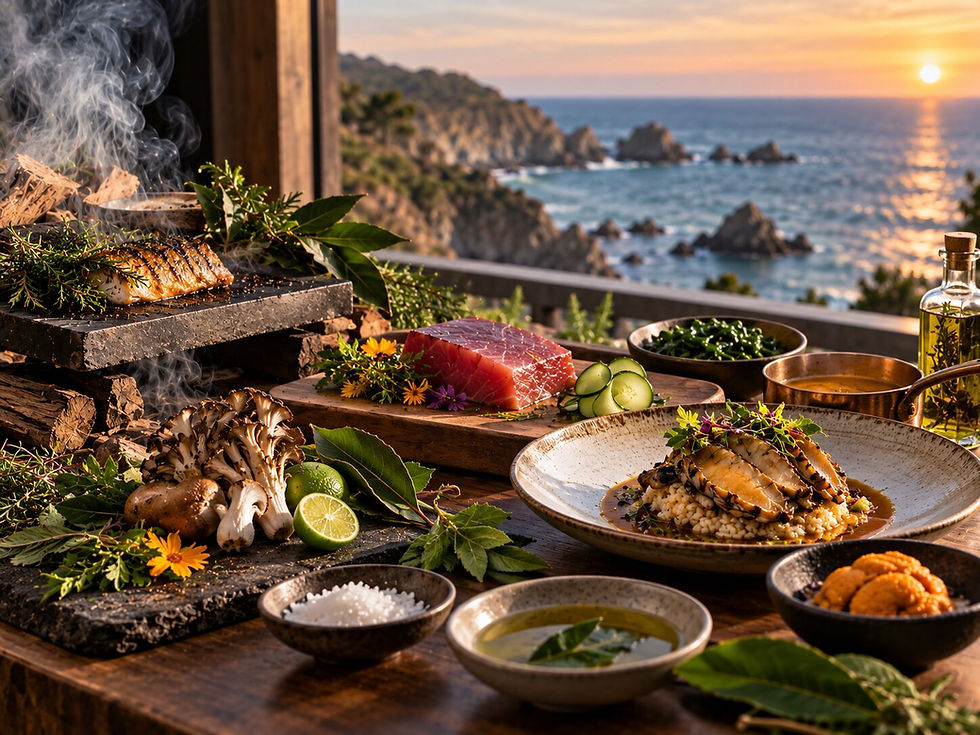
At a place like Harbor House Inn, the connection to the coast is part of that memory. The natural beauty of the Pacific Ocean dining setting, the restraint of the service, and the property’s quiet luxury all reinforce the cuisine without competing with it. For travelers, that often becomes one of the most memorable parts of the trip, not because it was loud or flashy, but because it felt deeply considered.
Who Is This Experience Best For?
A Two Michelin Star dining experience is ideal for travelers who appreciate exceptional cuisine and thoughtful hospitality.
Harbor House Inn is particularly well suited for:
Couples planning romantic getaways
Anniversary and honeymoon celebrations
Luxury travelers seeking quiet coastal escapes
Food lovers exploring Michelin-recognized restaurants
Culinary travelers visiting Northern California
Guests interested in sustainable luxury experiences
Travelers looking for destination dining on the Mendocino Coast
Planning Your Visit
To make the most of your Michelin dining experience:
Reserve your table several weeks or months in advance.
Consider staying overnight to enjoy the complete experience.
Arrive early to explore the surrounding property and coastline.
Plan extra time to enjoy the Mendocino Coast before or after your reservation.
Visit during different seasons to experience changing tasting menus inspired by local harvests.
Conclusion
Earning Two Michelin Stars reflects sustained excellence, not one unusually good night. It signals a restaurant that delivers exceptional cuisine with consistency, confidence, and a distinct identity that makes it worth the detour.
Harbor House Inn brings that standard to life in a way that feels complete. With Two Michelin Stars, a Michelin Green Star, and a Michelin Key, it combines hyper-local cuisine, sustainable hospitality, quiet luxury, personalized service, and the natural beauty of the Mendocino Coast into one cohesive experience. The result is more than dinner. It’s a destination.
If you’re planning a Northern California getaway and want a meal that feels inseparable from the place itself, Harbor House Inn is the kind of reservation worth building the trip around.
FAQs
What does Two Michelin Stars mean?
Two Michelin Stars mean the restaurant offers excellent cuisine that is “worth a detour,” according to the Michelin Guide. It points to outstanding cooking, consistency, ingredient quality, technique, and a clear culinary point of view.
Why is a Two Michelin Star restaurant worth visiting?
A Two Michelin Star restaurant is worth visiting because it offers more than an upscale meal. Guests can expect a high level of culinary skill, a distinctive identity, and a dining experience strong enough to influence travel plans.
What makes Harbor House Inn unique?
Harbor House Inn combines fine dining with a small-scale luxury stay on the Mendocino Coast. Its eleven guest rooms, twenty-seat restaurant, personalized hospitality, quiet luxury, and close connection to Harbor House Inn Ranch make it feel unusually intimate and place-driven.
Does Harbor House Inn have Michelin Stars?
Yes. Harbor House Inn has Two Michelin Stars. It has also earned a Michelin Green Star for sustainability and a Michelin Key for the quality of its lodging experience.
What is the difference between One, Two, and Three Michelin Stars?
One Michelin Star marks a very good restaurant in its category. Two Michelin Stars mean the cuisine is excellent and worth a detour. Three Michelin Stars represent exceptional cuisine worth a special trip.
What is the Michelin Green Star?
The Michelin Green Star recognizes restaurants with strong environmental practices, such as responsible sourcing, reduced waste, and broader sustainability efforts tied to hospitality and operations.
What is the Michelin Key?
The Michelin Key is Michelin’s hotel distinction. It recognizes properties that offer a standout stay based on character, service, design, and the overall guest experience.
Why do Michelin restaurants use seasonal ingredients?
Seasonal ingredients allow chefs to serve food at its peak while reflecting the natural rhythms of a region. They also support freshness, menu evolution, and a more honest expression of place.
Where is Harbor House Inn located?
Harbor House Inn is located in Elk, California, on the Mendocino Coast, overlooking the Pacific Ocean.
Why do travelers plan trips around Michelin restaurants?
Travelers often build trips around Michelin restaurants because dining has become a major part of luxury travel and culinary tourism. A standout restaurant can shape the entire itinerary, especially when it’s tied closely to its region and offers an overnight experience.
How rare are Two Michelin Star restaurants?
Two Michelin Star restaurants are relatively uncommon and represent a small percentage of restaurants included in the Michelin Guide. They are recognized for consistently delivering cuisine that is worth traveling to experience.
Can Michelin Stars be lost?
Yes. Michelin inspectors evaluate restaurants regularly, and stars can be awarded, maintained, or removed if the dining experience no longer meets Michelin's standards.
What is destination dining?
Destination dining refers to traveling specifically to experience a restaurant rather than simply dining while visiting another destination. Many Two Michelin Star restaurants become destinations in their own right because of their reputation and unique culinary experiences.
Is staying overnight recommended after a Michelin dining experience?
Yes. Staying overnight allows guests to relax, enjoy wine pairings, experience the surrounding destination, and fully appreciate the complete hospitality experience without rushing home after dinner.



Comments