

What Makes Hyper-Local Cuisine Different from Traditional Fine Dining?
Harbor House Inn has been cooking on this stretch of the Mendocino Coast long enough to notice a shift. Years ago, guests asked about the technique. What sous vide method did we use? Where the truffles were from. Now? They want to know what’s growing in the garden today. Whether the mushrooms were foraged that morning. Who harvested the seaweed? The conversation has moved. People aren’t chasing luxury ingredients flown in from somewhere else. They want food that tastes like this place, right now, on this day. That’s what Hyper-local Cuisine is about.
Harbor House Inn has become known for this approach. Not because we set out to follow a trend. We just cook what the land and sea give us. Chef Matthew Kammerer walks the property in the morning, checks the garden, and talks to the foragers. Then the menu takes shape. It’s a way of cooking that couldn’t be replicated anywhere else. That’s the difference between Hyper-local Dining and Traditional Fine Dining. Let’s dig into what that actually means.
What Is Hyper-local Cuisine?
Hyper-local Cuisine is cooking with ingredients from your immediate surroundings. Often within walking distance. The menu shifts constantly because nature doesn’t produce the same thing every day. It’s not the same as “locally sourced.” That phrase gets used loosely. A restaurant can buy from farms a hundred miles away and call it local. We’re talking about Hyper-local Ingredients from our own ranch. Mushrooms from the forest behind the inn. Seaweed and shellfish from the tidepools directly below the guest rooms. That proximity changes everything.
When you’re harvesting at dawn and serving at dinner, you can’t plan a menu weeks in advance. You walk outside, see what’s ready, and build around it. The ecosystem becomes the pantry. The plate tastes like that specific moment. Not like a signature dish designed to be repeated indefinitely. Guests sometimes ask for something they saw in a photo from three months ago. We can’t make it. The vegetable it relied on finished its season. That’s not a gimmick. It’s honesty.
What Are the Benefits of Hyper-local Cuisine?
Hyper-local Cuisine delivers exceptional freshness, celebrates seasonal ingredients, reduces environmental impact, and creates a dining experience that reflects the character of a specific place. Every meal is shaped by what the surrounding landscape naturally provides.
Hyper-local vs Traditional Fine Dining
Let’s put it side by side. Traditional Fine Dining often revolves around a chef’s greatest hits. Dishes that built their reputation. They stay on the menu regardless of the season. Hyper-local Dining can’t work that way. When an ingredient is gone, the dish disappears. We’ve seen guests disappointed. Then they taste what’s replaced it, and they understand.
Menus in a traditional kitchen might change quarterly. Ours can shift within a single service. Chef Matthew Kammerer and the team taste the morning harvest and adjust. It’s more work. It’s also more alive.
Ingredient sourcing tells the whole story. Traditional Fine Dining flies in langoustines from Europe and beef from Japan. We look out the window. The Pacific is right there. The ranch is up the road. The forest starts at the property line. The ingredients don’t travel. They’re carried in by hand. The carbon footprint shrinks without anyone writing a policy about it.
The experience itself lands differently. Traditional Fine Dining often showcases the chef’s technical prowess. Hyper-local Dining showcases the place. When you eat here, you taste the Mendocino Coast. The salt air, the pine, the minerality in the soil. The coast is the star. We just translate it onto the plate. Guests come prepared for surprise. They might encounter seaweed they’ve never heard of. They’re here for discovery, not for a dish they could order in a city.
How Harbor House Inn Does It
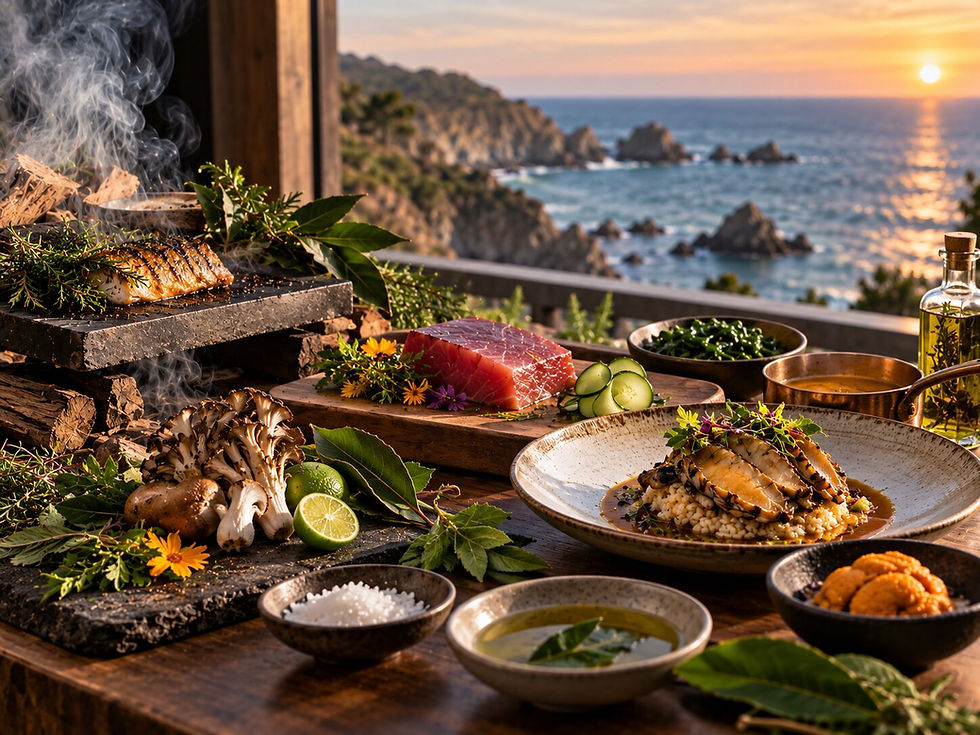
The Mendocino Coast isn’t a backdrop for our kitchen. It is the kitchen.
We have a working ranch. Not a decorative herb patch. The team plants, tends, and harvests. They know which tomato holds up to a wood fire and which one is better raw. That intimacy shapes every decision. The coastal waters give us seaweed, shellfish, and fish. The forest offers mushrooms, wild greens, and pine tips. The tidepools below the inn are a pantry of their own. Harvesting there takes timing and restraint. You take what the shore offers. You leave the rest so it comes back next season.
The menu is never static. A dish that appears in June is gone by July. Not because we want to be exclusive. Because the ingredient finished its natural cycle. Guests ask for the “favorite dish” they read about. We gently explain that the favorite dish right now is something else entirely. Something that’s peak today. That connection, looking out the window at the same coastline that produced your dinner, is what Hyper-local Cuisine builds everything on.
Why Is Hyper-local Dining Becoming More Popular?
More travelers are choosing Hyper-local Dining because they value authentic experiences, sustainable practices, and food that tells the story of a destination. Rather than seeking familiar dishes, they want meals that can only be enjoyed in one specific place.
Chef Matthew Kammerer’s Philosophy
Chef Matthew Kammerer didn’t show up with a binder of recipes he wanted to impose on this coast. He arrived willing to listen. To learn what the land could give and when.
His starting point is respect for the ingredient. Most kitchens begin with a concept and then source ingredients to fit. He flips that. He walks the property in the morning, checks the garden, talks to the foragers. Then he and the team decide what the day’s menu will be. That order of operations changes everything. The cooking techniques are elemental. Fire, steam, smoke. Nothing that masks the ingredient. A piece of fish from these waters doesn’t need a heavy sauce. It needs heat applied with precision and a plate that lets it speak.
Seasonal creativity is a requirement. When asparagus finishes and morels emerge, the menu shifts. No sadness in the transition. Just curiosity. What can we do with this? How does it want to be cooked? The menu evolves because it has to. A Hyper-local Cuisine kitchen that tried to serve the same menu year-round would be lying to itself.
There’s a conservation mindset underneath it all. Chef Matthew Kammerer participates in the purple sea urchin removal that helps kelp forests regenerate. He treats the forest with care. The kitchen doesn’t waste. The place comes first. Always.
Sustainability: That’s Just How We Work
We don’t hang sustainability on the wall. It’s in the bones of the kitchen.
Reduced transportation is obvious. Produce from our own ranch, seafood from the cove below. We’re not burning fuel to fly in ingredients. Seasonal harvesting means we work with nature’s rhythm, not against it. No heated greenhouses, no imported substitutes. We take what’s abundant. Leave what’s scarce. The ranch is a closed loop. Kitchen scraps become compost. Compost feeds the soil. Soil grows the next crop. That cycle reduces waste and builds healthier land.
The kitchen operates zero-waste. Vegetable trimmings become stocks. Shells go back to the earth. Chef Matthew Kammerer treats waste as a creative failure. If something can be used, it gets used. The purple sea urchin effort is a good example. Urchin populations exploded, destroying kelp forests. Removing them restores balance. The kitchen uses the uni. Conservation becomes an ingredient.
The inn runs on 100% renewable local energy. We filter our own water. Single-use plastics are mostly gone. These aren’t talking points. They’re daily habits. The Michelin Green Star recognized this starting in 2020. We’ve held it since. It validated something we already knew. Sustainability and Michelin-level dining aren’t opposites. Done right, they’re the same thing.
How Does Hyper-local Cuisine Support Sustainability?
Hyper-local Cuisine supports sustainability by reducing transportation, embracing seasonal harvesting, minimizing waste, and working in harmony with local ecosystems. These practices help preserve natural resources while enhancing the quality of every dish.
The inn runs on 100% renewable local energy. We filter our own water. Single-use plastics are mostly gone. These aren’t talking points. They’re daily habits. The Michelin Green Star recognized this starting in 2020. We’ve held it since. It validated something we already knew. Sustainability and Michelin-level dining aren’t opposites. Done right, they’re the same thing.
Why Travelers Are Seeking This Out
Culinary tourism is huge now. People plan trips around meals. They book flights because of a chef, a farm, or a coastline they want to taste. Hyper-local Dining sits at the center of that.
Slow travel and authentic experiences drive the shift. Guests don’t want a meal they could get in a city. They want something only available here. The food tells a story about the place. You learn about the Mendocino Coast through your palate. You taste the salt spray, the forest floor, the season. It’s education and pleasure together.
Sustainability matters to travelers in a way it didn’t ten years ago. They ask about sourcing. They want to know the kitchen isn’t harming the environment. Hyper-local Cuisine answers that before they ask. The practices are visible. The ranch is up the road. You can walk the gardens. Transparency is built in. Destination dining works when the destination is the reason the food tastes the way it does. A meal here couldn’t be replicated in a different zip code. That creates a memory no technique alone could produce.
A Different Kind of Guest Experience
Dining here isn’t just eating. It’s understanding where you are. When a server tells you the mushrooms were foraged that morning from the forest behind the inn, you look out the window differently. The trees aren’t just scenery. They’re part of the meal.
Sense of place becomes tangible. You taste the minerality of the coastal soil in the vegetables. The cold Pacific in the shellfish. The season itself. That’s not a metaphor. It’s real. Guests tell us they’ve never felt more connected to a landscape. Because the landscape is on the plate.
Seasonal discovery adds surprise. You can’t come back next month and order the same thing. The menu will have moved on. That keeps it fresh for returning guests. Every visit is a snapshot of a particular moment on this coast. You’re not eating a brand. You’re eating a day. The experience becomes a memory you can’t quite replicate at home. You’ll try to describe it to friends. You’ll struggle. The food didn’t just taste good. It tasted like this place. You had to be here.
The Michelin Recognition
Michelin stars mean something. One star: high-quality cooking worth a stop. Two Michelin Stars: excellent cuisine worth a detour. Three: exceptional cuisine worth a special journey. Inspectors visit anonymously. They evaluate food quality, technique, consistency, and service. The Michelin Green Star recognizes sustainable practices. It’s one of the highest honors in gastronomy.
Harbor House Inn has held Two Michelin Stars since 2021 and the Michelin Green Star since 2020. We don’t shout about it. But the recognition matters. It came from a system that evaluates food without bias. The inspectors didn’t know Chef Matthew Kammerer personally. They just ate the food. And they recognized something authentic.
His hyper-local, ingredient-driven philosophy is what the stars reflect. Not luxury ingredients flown in. Not elaborate techniques designed to dazzle. Just exceptional cooking rooted in this specific place. The inspectors saw the quality of the ranch produce. The creativity required to build a menu around what’s available that morning. The restraint in letting the ingredients lead. The deep sustainability practices. They saw that this approach isn’t a gimmick. It’s a complete commitment.
The Michelin Green Star acknowledges our renewable energy, ranch operations, water filtration, waste reduction, and conservation work. Those are daily habits. The recognition confirms that sustainable gastronomy can reach the highest level. It doesn’t require compromise. It requires integrity.
Our menu will never have a fixed signature dish. The stars didn’t change that. Chef Matthew Kammerer didn’t start plating his “Michelin dish” over and over. The kitchen keeps doing what it always did. Walking outside, seeing what’s ready, cooking it with care. The Michelin Dining Experience here is a moment in time on this coast. That’s what makes it worth the journey.
Hyper-local Cuisine isn’t a technique. It’s a relationship. Between the chef and the landscape. The kitchen and the seasons. The plate and the ecosystem that produced it. At Harbor House Inn, that relationship plays out every day. Not in a mission statement. In the walk Chef Matthew Kammerer takes each morning through the garden. In the forager returning with a basket of mushrooms. In the tidepool, harvest timed to the moon. The result is a meal that tastes like now, like here. And we think that’s what people are actually hungry for.
Who Should Experience Hyper-local Dining?
Hyper-local Dining is ideal for travelers who appreciate seasonal tasting menus, sustainable fine dining, and immersive culinary experiences connected to the local landscape. It appeals to guests who want every meal to reflect the destination they are visiting.
Frequently Asked Questions
What is Hyper-local Cuisine?
Cooking with ingredients from the immediate surroundings, often within walking distance. The menu changes constantly based on what nature provides.
How is it different from Traditional Fine Dining?
Traditional Fine Dining often relies on signature dishes and global sourcing. Hyper-local Cuisine follows the seasons, the ecosystem, and what’s available right now.
Is it the same as farm-to-table?
Farm-to-table means sourcing from local farms. Hyper-local Cuisine goes further, using ingredients often harvested on-site or within sight of the kitchen.
Why do menus change with the seasons?
Because ingredients do. We don’t force availability. We cook what’s at peak.
What role does sustainability play?
It’s built in. Reduced transportation, seasonal harvesting, on-site farming, and waste reduction. Not a separate program, just how we operate.
Who is Chef Matthew Kammerer?
The chef at Harbor House Inn, known for a hyper-local, ingredient-driven philosophy. Two Michelin Stars and a Michelin Green Star.
What makes the culinary philosophy unique?
It’s not about a signature style. The Mendocino Coast writes the menu based on what it provides each day.
What is sustainable gastronomy?
Cooking that prioritizes environmental stewardship, local sourcing, waste reduction, and respect for ecosystems alongside culinary excellence.
Why are Michelin restaurants embracing Hyper-local Cuisine?
Because it reflects authenticity, creativity, and a deep connection to place. Qualities the Guide increasingly values.
Where can you experience Hyper-local Cuisine in California?
At Harbor House Inn on the Mendocino Coast, where the menu is shaped by the ranch, forest, and tidepools just steps from the kitchen.



The distinction between hyper-local cuisine and traditional fine dining is really interesting. I think the best examples of hyper-local cooking don't necessarily need elaborate techniques to feel sophisticated—the quality and provenance of the ingredients can do a lot of the work. That's something I’d look for when travelling in Portugal too, particularly with seafood, regional produce and wine. If you want to experience that connection between landscape and food firsthand, https://valedaroca.com/rooms/ could make sense as part of a slower itinerary around the Lisbon region.