

Fire, Steam, and Smoke: The Techniques Behind Chef Matthew Kammerer's Cuisine
Updated: Jul 20
We’ve had guests sit down in our dining room, take a few bites, and then look up with a slightly confused expression. Not because the food is strange. Because it’s so simple. A piece of fish cooked over open flame. Vegetables that taste intensely of themselves. A broth that’s clear and quiet and somehow tastes like the ocean. They ask what we did to make it taste like that. The answer is usually less than they expect.
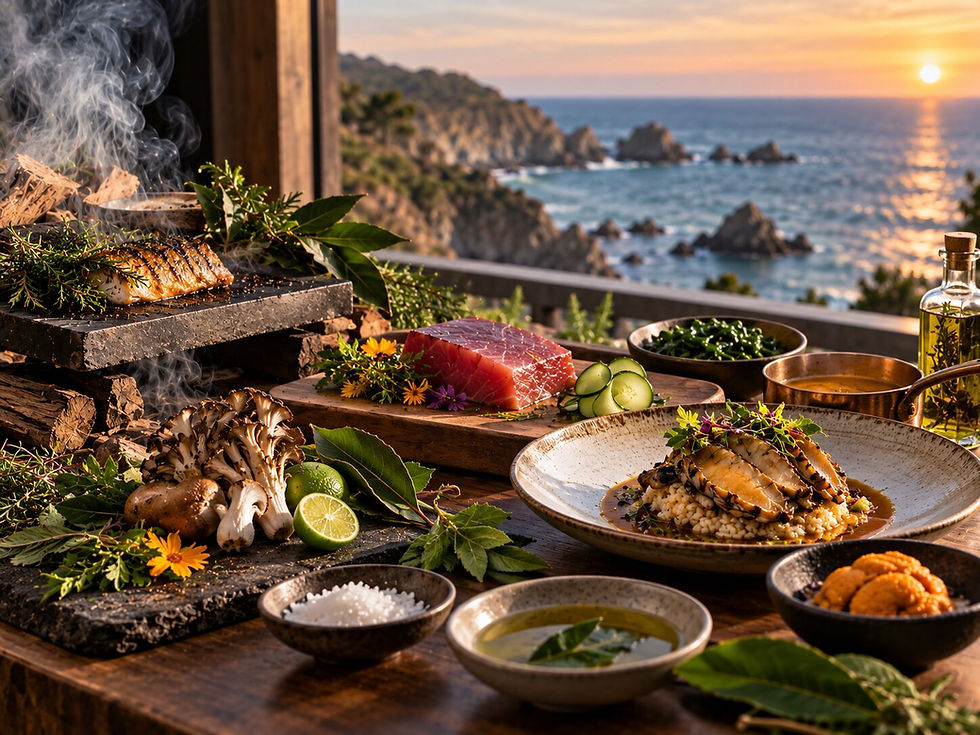
Chef Matthew Kammerer’s kitchen doesn’t rely on complicated machinery or elaborate sauces. The techniques are elemental. Fire, steam, and smoke. That’s the foundation. At Harbor House Inn, the methods match the place. Simple heat. Salt air. Woodsmoke from trees that grow a few hundred yards away. Here’s how it all comes together.
Why Technique Matters in Modern Fine Dining
Fine dining spent decades chasing complexity. Foams, gels, liquid nitrogen. We’ve watched that era fade. Today, the most respected kitchens are the ones showing restraint. Precision still matters. But precision now means knowing exactly when a scallop is done, not constructing a tower on the plate. The Michelin Guide has recognized this shift. One star is for high-quality cooking, worth a stop. Two Michelin Stars, excellent cuisine worth a detour. Three Michelin Stars, exceptional cuisine worth a special journey. The Michelin Green Star acknowledges sustainable practices. Harbor House Inn has held Two Michelin Stars since 2021 and the Michelin Green Star since 2020. Those accolades didn’t come from flash. They came from a kitchen that decided to do less, better.
Chef Kammerer’s approach embodies that philosophy. The inspectors saw a restaurant where technique serves the ingredient rather than the other way around. Where the fire isn’t there for drama. It’s there because it brings out caramelization and depth that a pan can’t. Where steam preserves the delicate quality of a just-picked vegetable. Where smoke adds aroma without overwhelming. That’s the difference between a chef imposing their will on the food and a chef listening to what the food needs. We think that’s what modern luxury cooking is about.
Why Do Michelin Chefs Use Simple Cooking Techniques?
Many Michelin chefs rely on simple techniques because they highlight the natural quality of exceptional ingredients instead of masking them. Precision, restraint, and consistency often create more memorable dishes than unnecessary complexity.
Understanding Fire, Steam, and Smoke
Fire, steam, and smoke aren’t just interchangeable methods. They each do something distinct. Chef Kammerer uses them like tools in a small, deliberate kit.
Fire gives you direct heat. We cook a lot over an open grill here. The flames lick the food, char the outside just enough, and leave the inside tender. You get natural caramelization, that slight bitterness from the char playing against the sweetness of the vegetable or the richness of the fish. Texture matters. A grilled carrot has a snap and a smokiness you can’t get from a steamer. The technique respects the ingredient by adding depth without masking its identity. When guests taste a piece of grilled abalone or a fire-roasted beet, they taste the place. Not a sauce.
Steam is the opposite. Gentle, indirect, quiet. We use it for things that are perfect as they are. A just-picked fava bean. A delicate piece of rockfish. Steam keeps the moisture in and preserves the pure flavor. There’s nowhere to hide. If the ingredient isn’t exceptional, you’ll know. That’s why steaming only works when your sourcing is obsessive. Chef Kammerer steams ingredients from our ranch the same morning they’re harvested. The result tastes as the garden smells. Nothing added. Nothing lost.
Smoke is the bridge. It connects the food to the landscape. We burn local wood, often redwood or oak from the property. The smoke doesn’t dominate. It weaves through the dish, an aroma that reminds you of the forest beyond the window. Chef Kammerer uses smoke the way someone might use a spice. Sparingly. With purpose. A light drift of smoke in a broth. A piece of fish kissed by smoldering branches. It adds depth, not heaviness. The three techniques work together. Fire for structure. Steam for purity. Smoke for memory.
How Do Fire, Steam, and Smoke Enhance Fine Dining?
Fire develops depth and caramelization, steam preserves freshness and delicate textures, and smoke adds subtle aroma without overpowering the ingredient. Together, these techniques create balanced dishes that showcase the natural character of every ingredient.
The Mendocino Coast Shapes the Cooking
None of these techniques would mean much if they weren’t responding to what’s right outside. The Mendocino Coast is a demanding place. Fog, wind, cold water, ancient redwoods. The ingredients that thrive here are resilient. They have strong flavors. Grilling over fire suits them. A delicate vegetable from a warmer climate might wilt. A coastal green, tougher and more mineral, stands up to the heat beautifully.
The seasons dictate the method. In early summer, we get tender shoots and herbs. Chef Kammerer leans toward steam and quick fire. In autumn, heartier root vegetables come in. He might smoke them slowly or roast them in the embers. The redwood forests and tidepools aren’t just scenery. They’re in the pantry. When you forage mushrooms, you can smell the damp earth and pine needles. That aroma finds its way into a dish through smoke because it’s part of the ecosystem. The cooking techniques aren’t random. They’re a direct response to what’s available and what the weather allows. You can’t grill over an open fire in a downpour. So the menu shifts. The kitchen adapts. That’s why technique is never fixed here.
Ingredient-driven cuisine Before Technique
There’s a principle Chef Matthew Kammerer follows that we’ve come to admire. The ingredient decides the technique. Not the other way around.
Most kitchens plan a menu, then source ingredients to match. Here, the morning starts with a walk. Chef checks the ranch. The forager brings in what the forest offers. Someone has been down to the tidepools. By the time the menu is written, the ingredients have already spoken. A basket of young fennel might suggest a quick char over fire to bring out the sweetness. A catch of rockfish, so fresh it’s still firm, might call for steam. The technique follows. It’s a humbler way to cook. The chef isn’t the star. The produce is.
This Hyper-local cuisine philosophy means minimal intervention. You don’t need to manipulate an ingredient that was harvested two hours ago. You just need to not ruin it. Fire, steam, and smoke are ideal because they’re simple. They don’t require a dozen steps. They require attention. The relationship between ingredient and preparation becomes a conversation. The carrot says, I’m sweet and earthy. The fire says, I’ll bring out your sugars. The smoke says, I’ll remind you of the forest. That’s the dialogue happening in the kitchen. No signature dishes. No repetition. Just a daily response to what the land and sea provide.
Sustainability Through Ancient Techniques
We’ve never put up a sign about our sustainability practices. The cooking itself makes the point.
Fire, steam, and smoke are inherently low-waste techniques. You’re not using disposable plastics or energy-intensive equipment. The wood we burn comes from the property. The heat is direct. The byproduct is ash, which goes back into the soil. The ranch is a closed loop. Kitchen scraps become compost. Compost feeds the soil. The cycle is visible if you walk the grounds. Chef Matthew Kammerer’s insistence on Seasonal ingredients means we never push the land beyond its capacity. We take what’s abundant. We leave what’s not.
The inn runs on 100% renewable local energy. We filter our own water. Single-use plastics are rare. These aren’t separate from the culinary philosophy. They’re part of the same mindset. Use what’s here. Waste nothing. Respect the source. The purple sea urchin conservation work is a direct extension of this. Urchins have overrun the kelp forests. Removing them helps the ecosystem recover. The kitchen uses the uni. A problem becomes an ingredient. Fire, steam, or smoke might finish it, depending on the day. The Michelin Green Star recognized this holistic approach. Not a marketing program. A way of working.
How Do Traditional Cooking Techniques Support Sustainable Fine Dining?
Traditional techniques like fire, steam, and smoke naturally complement sustainable cooking by minimizing waste, making thoughtful use of local resources, and allowing seasonal ingredients to remain the focus. They demonstrate that exceptional cuisine can also respect the environment.
Chef Matthew Kammerer’s Culinary Philosophy
We’ve worked alongside Chef Matthew Kammerer long enough to know that he doesn’t think in terms of brand. He thinks in terms of place.
His philosophy is rooted in Hyper-local cuisine. That phrase gets used loosely now. For him, it’s literal. The ranch, the forest, the cove. Nothing comes from more than a few miles away. The menu isn’t about him. It’s about what the Mendocino Coast is doing right now. He’s said, in his quiet way, that the goal is to translate the landscape onto a plate. That sounds poetic, but it’s practical. It means he spends as much time walking the property as he does in the kitchen. It means he knows when the sea urchin roe will be sweet and when it will be thin. It means he’s attuned to the ecosystem in a way most chefs aren’t.
There’s a conservation ethic that runs through everything. He doesn’t lecture about it. He just does it. Removing invasive urchins. Foraging selectively. Composting relentlessly. The menu evolves constantly because the coast evolves. He’s not trying to build a legacy around a dish. He’s trying to be faithful to a moment. That’s rare. It’s also why guests feel something here beyond a good meal.
Why Guests Experience More Than a Meal
Dining at Harbor House Inn isn’t a series of plates. It’s a narrative of the day.
When a server explains that the mushrooms were foraged that morning from the forest behind the inn, you look out the window with new eyes. The trees aren’t just scenery. They’re the source. The fire that cooked your fish came from wood that grew right there. The steam that finished your vegetables carried water from our own well. The smoke that lightly perfumes the air is the scent of the same redwoods you walked through before dinner. The storytelling is inherent. You taste the place. You understand it better.
Seasonal discovery adds surprise. You can’t come back next month and get the same meal. That keeps it alive for returning guests. It also means every visit is a unique snapshot of the coast. The food is an expression of a moment. The craftsmanship is visible in the restraint. No one’s showing off. They’re just doing things properly. That quiet confidence is what defines the luxury here. Not opulence. Honesty.
What Makes Chef Matthew Kammerer’s Dining Experience Unique?
Chef Matthew Kammerer creates dining experiences that evolve with the seasons, using hyper-local ingredients and elemental cooking techniques to reflect the Mendocino Coast. Every menu is shaped by the landscape, making each visit distinct and impossible to replicate elsewhere.
Harbor House Inn as an Expression of Place
The inn has been here since 1916. The techniques we’ve described aren’t new. They’re ancient. Fire, steam, and smoke have been used by people on this coast for centuries. Chef Kammerer’s kitchen isn’t inventing. It’s remembering and refining.
The ingredients come from this land. The woodsmoke smells like the forest. The vegetables taste of the mineral-rich soil. The seafood tastes of the cold Pacific. When all of it comes together, you get a meal that couldn’t exist anywhere else. Sustainability isn’t a layer on top. It’s the foundation. The hospitality follows the same logic. Intimate, unhurried, personal. No grand statements. Just a building full of care, perched above a cove, serving food that makes sense here. That’s what we aim for. Not perfection. Coherence.
Fire, steam, and smoke are not the point. They’re the means. In Chef Kammerer’s kitchen, there are tools for listening. For letting the Mendocino Coast speak through the food. When you eat here, you’re not being impressed by technique. You’re being introduced to a place. The grill marks on a carrot, the gentle perfume of smoke in a broth, the clean taste of a steamed leaf. It all adds up to something that feels inevitable. Not a performance. Just the coast, on a plate, on this particular evening. And that’s more than enough.
Frequently Asked Questions
Who is Chef Matthew Kammerer?
The chef at Harbor House Inn on the Mendocino Coast is known for Hyper-local cuisine, Ingredient-driven cuisine, and elemental cooking techniques.
What cooking techniques define his cuisine?
Fire, steam, and smoke are the foundations, used with restraint to enhance rather than mask the natural qualities of Seasonal ingredients.
Why are fire, steam, and smoke important in fine dining?
They allow flavor development, texture, and aroma without overcomplicating the dish. They reflect a philosophy of precision through simplicity.
What is Ingredient-driven cuisine?
An approach where the ingredient dictates the technique, not the other way around. The menu follows what the land and sea provide.
How does Hyper-local cuisine influence cooking techniques?
When ingredients are harvested steps from the kitchen, minimal intervention techniques like quick fire or gentle steam preserve their freshness and identity.
Why do Michelin chefs use simple cooking methods?
Because simplicity requires the highest quality ingredients and great technical skill, restraint is harder than complexity.
How does Harbor House Inn's culinary philosophy support sustainability?
Through on-site sourcing, renewable energy, waste reduction, and conservation efforts like purple sea urchin removal, all of which align with the Michelin Green Star.
What makes Chef Matthew Kammerer's approach unique?
He doesn't impose a signature style. The Mendocino Coast writes the menu, and its techniques express the character of the landscape in that moment.
Why does Harbor House Inn's menu change with the seasons?
Because the available ingredients change. The kitchen cooks what's at peak, which means constant evolution.
Where can you experience Chef Matthew Kammerer's cuisine?
At Harbor House Inn on the Mendocino Coast, a luxury coastal inn in California.



Comments