

How Michelin Green Stars Are Changing Fine Dining
Updated: Jul 20
The Michelin Green Star has quickly become one of the clearest signals of where luxury hospitality is headed. A decade ago, guests might have focused only on technique, wine pairings, and service. Now they’re also asking sharper questions: Where was this sourced? How is waste handled? What does a truly sustainable Michelin restaurant look like behind the scenes? That shift matters.
For any Michelin Green Star restaurant, sustainability is no longer a side note. It sits right alongside culinary excellence. And in California, Harbor House Inn offers a strong example of sustainable fine dining done with real conviction, where the guest experience, the kitchen philosophy, and the day-to-day operations all reflect a deeper commitment to place, responsibility, and care.
In simple terms: A Michelin Green Star restaurant is a restaurant recognized by the Michelin Guide for combining exceptional cuisine with meaningful environmental responsibility. The award highlights restaurants where sustainability is integrated into both the dining experience and everyday operations.
Key Takeaways
Michelin Green Star recognizes restaurants that combine exceptional cuisine with environmental responsibility.
Sustainable fine dining extends beyond the kitchen to sourcing, energy use, waste reduction, and conservation.
Harbor House Inn has earned a Michelin Green Star, Two Michelin Stars, and a Michelin Key.
Hyper-local ingredients and seasonal menus help create authentic destination dining experiences.
Modern luxury travelers increasingly value sustainability alongside culinary excellence.
Michelin Recognition | What It Means |
⭐ One Michelin Star | A very good restaurant in its category |
⭐⭐ Two Michelin Stars | Excellent cuisine worth a detour |
⭐⭐⭐ Three Michelin Stars | Exceptional cuisine worth a special journey |
🌿 Michelin Green Star | Outstanding commitment to sustainable gastronomy |
🔑 Michelin Key | Exceptional hotel experience |
What Is the Michelin Green Star?
The Michelin Green Star is Michelin Guide's sustainability distinction awarded to restaurants that demonstrate exceptional environmental responsibility alongside outstanding cuisine. Restaurants are recognized for responsible sourcing, environmental stewardship, waste reduction, and sustainable hospitality practices that enhance both the guest experience and the long-term health of their surrounding communities.
Introduced by the Michelin Guide to spotlight sustainable gastronomy, the award points diners toward places that are actively reducing their environmental footprint while still delivering a memorable meal. That can include responsible sourcing, lower-waste kitchen systems, conservation work, energy choices, and broader responsible hospitality practices that shape the full guest experience.
Why does that matter in modern fine dining? Because people notice the difference. A polished tasting menu still counts, of course, but many guests now expect more than precision and luxury. They want values they can see. They want restaurants that respect the land, the ocean, and the communities around them.
That’s where fine dining sustainability has become a real standard rather than a niche concern. The Green Star acknowledges restaurants proving that environmental care and excellence on the plate can live in the same room, comfortably.
How Restaurants Earn a Michelin Green Star
The Michelin Green Star is awarded by Michelin Guide inspectors to restaurants that demonstrate meaningful environmental commitment alongside culinary excellence. While Michelin does not use a public scoring system, inspectors consider several factors, including responsible sourcing, seasonality, waste reduction, resource management, biodiversity, and long-term sustainability practices. Every Green Star restaurant must show that sustainability is integrated into daily operations rather than treated as a marketing initiative.
Did You Know?
The Michelin Green Star was introduced to recognize restaurants leading the future of sustainable gastronomy. It highlights environmental responsibility while maintaining the culinary standards expected from Michelin-recognized dining.
Sustainability Has Become Part of the Luxury Dining Experience
Luxury has changed. Quietly, but for good.
Today’s travelers, especially those planning destination meals and overnight stays, are more aware of how hospitality affects local ecosystems. They look for seasonal tasting menu experiences built around place, not excess. They ask whether a property supports sustainable seafood, regional farms, and long-term stewardship rather than shipping ingredients across the globe just to impress someone for an evening.
That change is tied to broader travel habits in the U.S. as well. Conscious travel has gone mainstream, from boutique desert resorts in Arizona to coastal inns in Northern California. Guests want beauty, yes, but they also want authenticity. A dinner feels more meaningful when it reflects the landscape outside the window, the weather that week, and the work of nearby growers, fishers, and makers.
That’s the appeal of hyper-local cuisine and ingredient-driven cuisine. It feels grounded. Honest, too.
For many diners, sustainability is no longer an extra feature tucked into a press release. It’s part of the luxury dining experience itself. In practice, that means responsible sourcing, seasonal ingredients, conservation awareness, and a sense that the restaurant is caring for the place that makes the meal possible in the first place.
Michelin Green Star Restaurants
The Michelin Green Star recognizes restaurants that demonstrate a strong commitment to sustainable gastronomy and environmentally responsible hospitality. Beyond exceptional cuisine, these restaurants integrate sustainability into sourcing, operations, conservation efforts, and their overall dining philosophy, reflecting a growing shift toward responsible luxury within the hospitality industry.
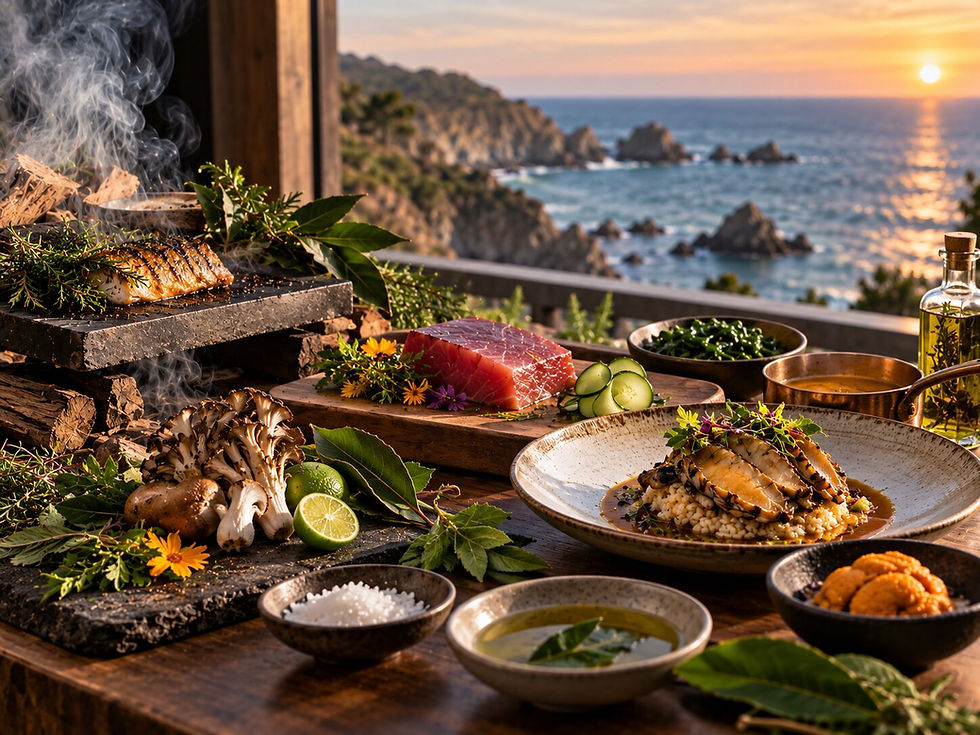
At Harbor House Inn, that idea shows up as daily practice, not branding copy. Set on the Mendocino Coast in Elk California, the property holds a Michelin Green Star, Two Michelin Stars, and a Michelin Key, which places it in rare company within California luxury dining. Under Chef Matthew Kammerer, the restaurant’s approach to hyper-local cuisine is tied closely to the surrounding coastline, nearby producers, and the Harbor House Inn Ranch.
The operational side matters just as much. Harbor House Inn uses renewable local energy, a water filtration system, kitchen water reuse, and upcycling practices that cut waste in practical ways. Conservation also enters the picture through work connected to purple sea urchin conservation, a subject with real relevance along the Pacific coast. Nothing about it feels ornamental. Instead, the property presents sustainable hospitality as part of how it functions every day, from sourcing to stewardship, while maintaining the standards guests expect from a high-level, place-driven retreat beside the Pacific Ocean.
Beyond the Kitchen: How Sustainability Shapes Hospitality
Food gets the headlines, but operations tell the real story.
A restaurant can talk endlessly about local produce while wasting water, burning excess energy, or relying on disposable systems behind the scenes. That disconnect is exactly why sustainability in hospitality has expanded beyond the plate. Strong programs now include renewable energy, water conservation, waste reduction, and more careful purchasing across the property.
For high-end inns and restaurants, this can mean filtered water systems that reduce bottled waste, laundry and housekeeping choices that limit unnecessary resource use, and smarter methods for reusing materials that would otherwise be discarded. Small changes add up. Fast.
In a luxury setting, those choices also shape the guest experience in subtle ways. A stay can still feel refined, warm, and deeply personal while being less wasteful and more accountable. In fact, that restraint often reads as more thoughtful. Less show. More substance.
This is the newer version of sustainable hospitality. It includes the kitchen, but it doesn’t stop there. It extends to environmental stewardship across the building, the grounds, the supply chain, and the service model itself.
Harbor House Inn's Everyday Approach to Sustainability
Harbor House Inn demonstrates sustainability through measurable practices rather than marketing claims. The property integrates Harbor House Inn Ranch into its sourcing philosophy, operates using renewable local energy, reduces waste through upcycling initiatives, conserves resources through water filtration and kitchen water reuse systems, and supports regional conservation efforts such as purple sea urchin restoration. Together, these initiatives help explain why Harbor House Inn has earned a Michelin Green Star alongside Two Michelin Stars and a Michelin Key.
There’s a practical side to that philosophy. Renewable local energy supports operations. A water filtration system helps cut reliance on packaged alternatives. Kitchen water reuse reflects a more careful relationship with resources. And through upcycling and plastic reduction efforts, waste is treated as a design problem to solve, not an unavoidable cost of doing business.
Then there’s conservation. Along this stretch of the California coast, purple sea urchin conservation connects directly to ocean health and habitat balance. For a restaurant so closely tied to the shoreline, that isn’t abstract. It’s local responsibility.
All of this helps explain why Harbor House Inn has earned a Michelin Green Star in addition to Two Michelin Stars and a Michelin Key. The accolades matter, sure, but the larger point is this: sustainability here isn’t staged for guests. It’s woven into the property’s identity, from seasonal ingredients to operations to the style of personalized hospitality that defines the stay.
Why Michelin Green Stars Matter to Modern Travelers
Travelers are getting pickier. Fair enough.
People planning destination dining trips want more than a reservation at a famous room. They want context. They want to know that the place they’re supporting has a meaningful connection to its region and isn’t draining the very landscape that makes it desirable. That’s especially true in culinary tourism, where the restaurant often becomes the reason for the trip.
The Michelin Green Star gives travelers a shorthand for that deeper standard. It signals that a property takes environmental awareness seriously and treats sustainability as part of the guest promise. For diners seeking conscious luxury, that matters a lot. It can shape where they stay, where they eat, and how long they linger.
There’s also an emotional layer here. A destination dining experience feels richer when it reflects real local character, whether that means the coastline, nearby farms, or a region’s fishing culture. Guests aren’t just buying dinner. They’re buying trust, memory, and meaning.
That’s why sustainable fine dining keeps gaining traction with modern travelers. It offers authenticity without sacrificing pleasure, and it aligns indulgence with a longer view of impact.
Why Sustainability Matters to Today's Luxury Travelers
Modern travelers increasingly choose destinations that align with their values as well as their expectations for comfort. Restaurants that prioritize sustainability often provide a stronger connection to local communities, regional producers, and the surrounding landscape. For many guests, responsible hospitality adds another layer of meaning to an already memorable dining experience.
The Future of Fine Dining Is Responsible Hospitality
Fine dining is heading toward something sharper, leaner, and more place-aware. Honestly, it already has.
The restaurants leading that change aren’t abandoning luxury. They’re redefining it through seasonal cooking, conservation-minded sourcing, smarter operations, and stronger ties to local communities. In that model, the best meal in the room isn’t just beautifully executed. It’s also accountable.
The Michelin Green Star is helping push that standard forward by rewarding restaurants that take conservation in restaurants, fine dining sustainability, and responsible sourcing seriously. For chefs and owners, it creates a visible benchmark. For guests, it offers clarity. And for the industry, it nudges prestige toward purpose.
That has long-term value. Restaurants influence farmers, fishers, energy use, staffing practices, purchasing decisions, and even how travelers think about place. A thoughtful restaurant can’t solve every environmental issue, obviously, but it can model a better way to operate.
That’s the future: luxury with a conscience, seasonal cooking with discipline, and hospitality that protects what it depends on.
Conclusion
Michelin Green Stars reflect a larger change in fine dining, one where extraordinary meals and environmental responsibility belong together. That’s no longer a fringe idea. It’s becoming the standard thoughtful guests look for.
Harbor House Inn demonstrates how culinary excellence and environmental responsibility can strengthen one another. With a Michelin Green Star, Two Michelin Stars, and a Michelin Key, the property offers a rare combination of exceptional cuisine, sustainable hospitality, and luxury accommodations on California's Mendocino Coast. For travelers seeking destination dining that reflects both craftsmanship and care for place, Harbor House Inn represents one of the state's most distinctive culinary experiences.
Who Should Visit a Michelin Green Star Restaurant?
A Michelin Green Star dining experience is ideal for:
Travelers interested in sustainable luxury travel
Guests seeking Michelin-recognized restaurants
Culinary travelers exploring Northern California
Couples planning romantic getaways
Food enthusiasts who value seasonal and hyper-local cuisine
Visitors interested in environmentally responsible hospitality
FAQ
What is the Michelin Green Star?
The Michelin Green Star is an award from the Michelin Guide that recognizes restaurants committed to sustainable gastronomy and environmentally responsible hospitality. It highlights places where sustainability is part of sourcing, operations, and overall philosophy.
How is a Michelin Green Star different from Michelin Stars?
Traditional Michelin Stars evaluate culinary quality, technique, consistency, and the overall dining experience. The Michelin Green Star focuses specifically on sustainability, including environmental practices, responsible sourcing, and stewardship beyond the plate.
Why is sustainability important in fine dining?
Sustainability matters in fine dining because luxury hospitality depends on healthy landscapes, reliable producers, and long-term resource care. Guests also increasingly want meals that reflect ethical sourcing, seasonal ingredients, and lower-impact operations.
Does Harbor House Inn have a Michelin Green Star?
Yes. Harbor House Inn has earned a Michelin Green Star, along with Two Michelin Stars and a Michelin Key, reflecting both culinary excellence and a strong commitment to sustainable hospitality.
What sustainable practices does Harbor House Inn follow?
Harbor House Inn integrates several practices into daily operations, including hyper-local sourcing, support from Harbor House Inn Ranch, renewable local energy, water filtration, kitchen water reuse, upcycling, plastic reduction efforts, and conservation-minded practices tied to the surrounding coast.
What is sustainable gastronomy?
Sustainable gastronomy is an approach to food and hospitality that considers environmental impact, sourcing, seasonality, waste, community relationships, and long-term stewardship while still delivering a high-quality dining experience.
How does Harbor House Inn support conservation?
Harbor House Inn’s sustainability approach includes conservation-minded practices connected to the local environment, including awareness around purple sea urchin conservation and a broader commitment to protecting the coastal region that shapes its cuisine and hospitality.
What is hyper-local cuisine?
Hyper-local cuisine centers on ingredients sourced as close to the restaurant as possible, often from nearby farms, ranches, fisheries, or the property itself. It usually results in more seasonal, place-driven menus.
Where is Harbor House Inn located?
Harbor House Inn is located in Elk, California, on the Mendocino Coast overlooking the Pacific Ocean.
Why do travelers choose sustainable luxury dining?
Travelers choose sustainable luxury dining because it combines comfort, authenticity, and environmental awareness. It offers a more meaningful experience, especially for guests who care about responsible travel, destination dining, and supporting places with long-term values.
Is a Michelin Green Star harder to earn than Michelin Stars?
The Michelin Green Star is evaluated differently from Michelin Stars. Rather than focusing solely on culinary excellence, it recognizes restaurants that integrate sustainability into sourcing, operations, conservation, and overall hospitality.
Can a restaurant have both Michelin Stars and a Michelin Green Star?
Yes. Some restaurants earn Michelin Stars for culinary excellence while also receiving a Michelin Green Star for their commitment to sustainable gastronomy. Harbor House Inn is one such example.
Why do Michelin Green Star restaurants use hyper-local ingredients?
Hyper-local sourcing allows restaurants to reduce transportation impacts, support nearby producers, highlight seasonal ingredients, and create menus that reflect the unique character of their region.



Comments