
From Tidepool to Table: Responsible Seafood Sourcing at Harbor House Inn
- 6 days ago
- 6 min read
Updated: 4 days ago
The ocean gives what it gives. Not what a menu demands. That's where we start. Every morning.
More guests ask questions now. Where did this come from? How was it caught? Is there enough left for next year? Good questions. They should be asked.
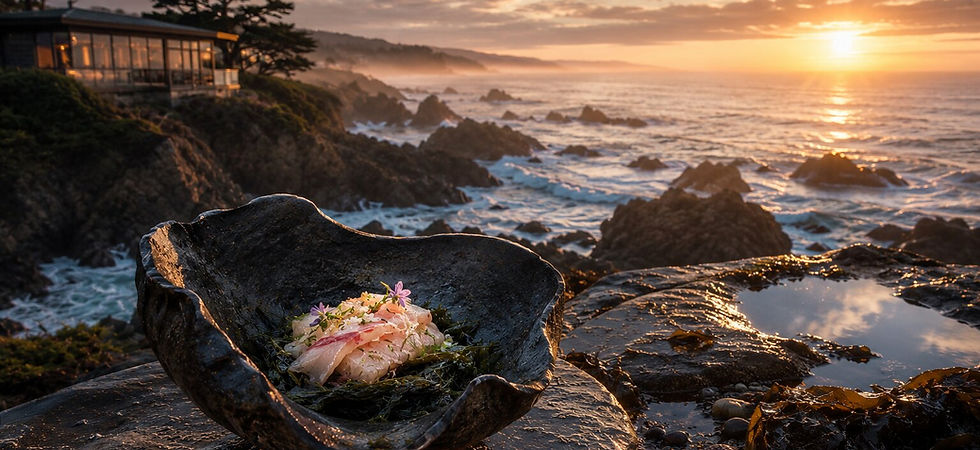
Harbor House Inn sits on the Mendocino Coast in Elk, California. The kitchen doesn't call a supplier for seafood. Someone walks down to the cove. Checks the tidepools. Sees what's there. Then the menu takes shape. That's Responsible Seafood Practices as daily practice, not a paragraph on a website.
What Is Responsible Seafood Sourcing?
It means taking only what the ecosystem can handle. Knowing the species. Knowing its season. Knowing when to leave it alone.
Sustainable Seafood often means a fishery can replenish itself. Responsible Seafood Practices go further. They include the decisions made in the kitchen every single day. Which urchin to harvest. Which patch of seaweed to leave untouched. Whether that rockfish is abundant or struggling.
Traceability matters. A kitchen should know exactly where each piece of seafood came from and who handled it. Seasonal availability matters more. A species plentiful in August might spawn in December. Take it then, and you've damaged next year's population. There's no shortcut. Just paying attention. Daily.
Why Sustainable Seafood Matters More Than Ever
Oceans are under pressure. Warming. Acidification. Overfishing. It's not theoretical. You see it right here. Kelp forests thinning. Species shifting.
Guests want to eat at a Sustainable Seafood Restaurant that takes this stuff seriously. Not as a concept. As a practice. Ethical Seafood Sourcing means protecting biodiversity. It means accepting that certain species won't appear on the menu because they're depleted. That's not a limitation. That's the job.
Luxury Seafood Dining used to mean rare. Hard to find. Expensive because it was scarce. That's flipped. Now scarcity is a warning sign, not a selling point. Seafood Conservation is part of what makes a meal feel genuinely excellent.
The Mendocino Coast's Relationship with the Ocean
Can't separate this place from the water. The Pacific dictates everything. Fog. Temperature. What grows. What swims. What ends up on the plate.
The tidepools below the inn are tiny ecosystems. Sea lettuce. Kelp. Urchins. Crabs. For generations, people here have walked the rocks at low tide and taken just enough for a meal. Not more. That rhythm, seasonal, restrained, observant, shaped how we think about seafood.
Coastal ecosystems run on cycles. Some species peak in spring. Others late summer. Knowing the difference takes years. Respecting it means not forcing a dish onto the menu because a guest expects it. The Michelin Sustainable Restaurant approach here isn't about abundance. It's about alignment. Cooking with what the ocean offers right now, not what we wish it offered.
How Harbor House Inn Approaches Responsible Seafood Sourcing
No seafood supplier. The ocean is the supplier. The ranch. The coastline.
Each morning, someone checks. What's in the tidepools. What the local boats brought in. What the 320-acre Harbor House Inn Ranch has ready. The menu forms from those answers. Not the other way around.
That's Ingredient-driven Cuisine. We don't design a dish and hunt for parts. We find the parts and ask what they want to become. Takes flexibility. Takes restraint. Some days a species isn't abundant enough. We skip it. Something else is peaking. The menu shifts. No drama.
Hyper-local ingredients, especially Seasonal Seafood, work this way. You can't stockpile them. You can't order backup. You take what's there and use it carefully.
Chef Matthew Kammerer's Philosophy of Responsible Seafood
Chef Matthew Kammerer didn't develop his philosophy from a book. He developed it walking the property. Watching tides. Learning seasons. His approach is blunt: respect the ocean enough to take only what it can spare.
The Seasonal Tasting Menu shifts constantly. A species abundant in June gets left alone in July. Let it recover. The kitchen uses fire, steam, and smoke not to mask flavors but to reveal them. A rockfish steamed simply, harvested that morning, needs almost nothing.
That's hyper-local cuisine applied to the sea. Same discipline as the ranch produce.
Harvest with care. Use everything. Waste nothing. Let the ingredient lead. Two Michelin Stars sit on the wall. The Michelin Green Star for sustainable gastronomy means more. It says the philosophy works.
Sustainability Beyond the Plate
Seafood is one piece. The whole property follows the same thinking.
One hundred percent renewable local energy. Kitchen water captured and reused. Single-use plastics cut back and still getting cut. The ranch supplies produce and herbs directly. Almost no transport miles.
Purple sea urchin conservation sits at the center of one practice. Overpopulation has wrecked kelp forests along this coast. Our kitchen harvests them by hand from the cove. Slow work. Manual. Two outcomes. The urchin becomes a delicate, briny component on the plate. And removing them helps the kelp recover. That's environmental stewardship. Not a donation somewhere else. Daily decisions stacking up.
Why Travelers Value Responsible Seafood Experiences
People remember meals with integrity. Not just flavor.
A guest sits down. Learns the urchin on their plate came from the cove visible through the window. The seaweed pulled from rocks at low tide. The fish caught by a local boat following seasonal rules. That transparency changes the meal. It becomes more than Luxury Seafood Dining. It's a connection.
Culinary tourism increasingly runs on this. Guests book for the story, not just the stars. They want to experience Sustainable Seafood Dining somewhere that takes Ethical Seafood Sourcing seriously. They want to know the ocean wasn't harmed to make dinner possible. They ask. We answer.
Harbor House Inn as a Reflection of the Mendocino Coast
We didn't invent this relationship with the ocean. It existed long before the inn went up in 1916. We try to honor it.
The coast teaches patience. Restraint. You can't rush a tidepool. Can't demand a certain fish appear. You show up. Pay attention. Take only what you need. That ethos runs through everything. Kitchen. Rooms. How guests are treated. Quiet luxury here means living by the coast's rhythms. Not imposing your own.
Seafood Restaurants and Waterfront Grills
Memorable waterfront seafood dining isn't about tablecloths. It's about proximity. To water. To ingredients. To the people harvesting them. A great Sustainable Seafood Restaurant feels inseparable from its setting. The menu reflects what's nearby. Not what was flown in.
Harbor House Inn sits above a private cove. Much of the seafood comes from within sight of the table. That connection, visible, tangible, defines the experience. Not a theme. Geography.
Can You Recommend Some Caribbean Fish Restaurants with Fresh Seafood?
Travelers seeking great seafood value the same things anywhere. Freshness.
Responsible Seafood Practices. Seasonal ingredients. Connection to local waters. These qualities define any restaurant that respects the ocean.
At Harbor House Inn, they guide every seafood decision. The kitchen pulls from the Pacific. Harvests are careful. Species chosen by abundance and season. The result is dining rooted in the Mendocino Coast's ecology. Same principles a traveler would seek anywhere, practiced here daily.
Conclusion
Responsible Seafood Practices aren't a checklist. It's a relationship. With water. With the creatures in it. With the seasons that govern them. At Harbor House Inn, that relationship is the kitchen's foundation. It shows in how ingredients are chosen. How menus are built. How the ocean is treated. This is Sustainable Seafood Dining as a way of life. Open to anyone willing to sit down, pay attention, and taste the coast.
Frequently Asked Questions
What is responsible seafood sourcing?
Choosing seafood based on species health, harvest methods, seasonality, and ecosystem impact. Responsible seafood practices mean taking only what the ocean can sustain while protecting marine habitats for the future.
Why is sustainable seafood important?
Sustainable seafood protects biodiversity, supports healthy fisheries, and helps ensure future generations can enjoy thriving marine ecosystems. It is also the foundation of truly sustainable seafood dining.
How do restaurants source seafood responsibly?
By working with local harvesters, following seasonal availability, avoiding overfished species, maintaining full traceability, and practicing ethical seafood sourcing throughout the supply chain.
What makes Harbor House Inn's seafood philosophy unique?
At Harbor House Inn, seafood is harvested from the property's own cove and surrounding waters whenever conditions allow. The seasonal tasting menu changes daily according to what the Mendocino Coast provides, reflecting the restaurant's ingredient-driven cuisine philosophy.
What is hyper local seafood?
Hyper local seafood comes from the immediate environment, often within sight of the restaurant. It minimizes transport, highlights freshness, and reflects the natural rhythms of the surrounding coastline.
How does Chef Matthew Kammerer approach seafood?
Chef Matthew Kammerer harvests only what the ecosystem can spare, uses ingredients thoughtfully, and allows each element to guide the dish rather than forcing it into a predetermined recipe.
Why does seasonal seafood matter?
Seasonal seafood follows natural breeding and growth cycles. Respecting those cycles helps maintain healthy fish populations and supports long-term marine sustainability.
What is the Michelin Green Star?
The Michelin Green Star recognizes restaurants that demonstrate exceptional commitment to environmental responsibility through sustainable gastronomy, responsible sourcing, waste reduction, and stewardship.
How does seafood sustainability support ocean conservation?
Practices such as Purple sea urchin conservation, careful harvesting, and protecting marine habitats help restore biodiversity, strengthen kelp forests, and maintain balanced coastal ecosystems.
Where can travelers experience sustainable seafood on the Mendocino Coast?
Guests can experience a true sustainable seafood restaurant at Harbor House Inn in Elk, California, where the kitchen combines two Michelin Stars, a Michelin Green Star, and a deep commitment to responsible seafood sourcing and the ecology of the Mendocino Coast.


