

Sustainable Hospitality Is Becoming a Traveler Expectation
We’ve been doing this long enough to remember when sustainable hospitality was a nice little paragraph on a sustainable hotel website. Something about towel reuse and recycling. Guests rarely asked about it. It was a checkbox, not a conversation. That has completely flipped.
Now, guests want to know where the power comes from. How the kitchen sources its vegetables. Whether the inn is actually doing something or just printing words on a card, they can tell the difference. And they’re choosing where to stay based on it. The air feels cleaner. The food tastes more honest. The whole sustainable guest experience lands differently.
Harbor House Inn sits on a stretch of the Mendocino Coast that doesn’t let you forget the natural world. The Pacific is right there. The redwoods tower behind. When you’re surrounded by that, you either respect it or you don’t belong. We’ve tried to build something that fits. Renewable energy, our own ranch, a kitchen that cooks hyper-local cuisine from what the land gives. It’s not a program. It’s just how we work. And it turns out that’s exactly what travelers now expect.
Why Is Sustainable Hospitality Important to Modern Travelers?
Sustainable hospitality matters because travelers increasingly want their stays to reflect their environmental values without sacrificing comfort or luxury. Thoughtful practices create experiences that feel more authentic, responsible, and connected to the destination.
What Is Sustainable Hospitality?
This isn’t the same as green marketing. We’ve all seen the hotels that put a recycling bin in the room and call themselves an eco-friendly luxury hotel. That’s not sustainability. That’s theater. Real sustainable hospitality is visible in the details. Where the electricity comes from. How the kitchen handles waste. Whether the property supports the land around it or just extracts from it. It’s an ongoing practice, not a certificate on the wall.
They still want luxury. But luxury now includes knowing the place they’re staying isn’t trashing the planet. It’s become a standard, not a niche. If you’re not doing it, guests notice. And they’ll choose somewhere that is.
Why Travelers Now Expect Sustainability
We’ve watched this change happen in real time. Years ago, guests might ask about organic options at breakfast. Now they ask about energy sourcing and whether the seafood is responsibly harvested. It’s not a fringe concern anymore.
Environmental consciousness has become widespread. Tourists now consider not only the price but also how their accommodation choices affect the environment. They are looking for real travel experiences that do not harm the local environment. It’s bleeding into all of sustainable travel. People think about the long-term impact of their visit. They want luxury with purpose. Not sacrifice. Just integrity.
Industry trends back this up. Surveys show a majority of travelers now prefer accommodations with strong sustainable hospitality practices. They’re willing to pay more for it. We don’t need a report to tell us that. We see it in the questions guests ask and the relief on their faces when they realize our practices are real. It matters to them.
Deeply.
What Sustainable Hospitality Looks Like at Harbor House Inn
We don’t have a sustainability brochure. We just have the way we operate. It’s all back-of-house stuff that guests experience without needing it explained.
The inn runs on 100% renewable energy from local sources. That’s not a headline. It’s just how the lights stay on. Our ranch supplies much of the kitchen’s produce. Vegetables, herbs, fruit. The distance from soil to plate is measured in steps, not miles. We installed an in-house water filtration system. Guests drink from glass bottles we refill. Single-use plastics are almost nonexistent. Not because it’s trendy. Because we’re surrounded by ocean and it feels wrong to add more garbage.
The kitchen reuses water where possible. Trimmings go to stocks. Shells go to compost. We even support purple sea urchin conservation in the cove to help the kelp forests recover. It’s a conservation effort that also gives the kitchen a unique ingredient. That’s the kind of closed loop we aim for. The Michelin Green Star recognized this. We’ve held it since 2020. But we were doing these things long before. It’s just how we think a place like this should be run.
Sustainability Through Hyper-Local Cuisine
Chef Matthew Kammerer’s kitchen is the most visible expression of our sustainability. His philosophy is hyper-local cuisine. Not as a concept. As a daily reality.
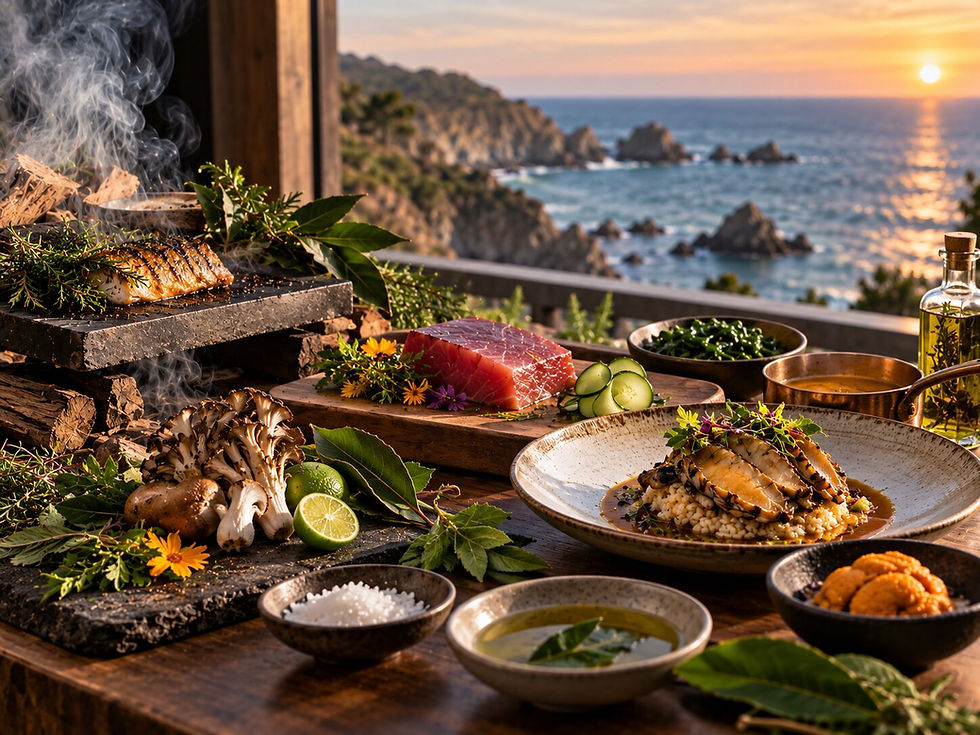
Ingredients come from our ranch, from the forest beyond the property, from the tidepools directly below the inn. The menu shifts with what’s available. When asparagus finishes, it’s gone. When mushrooms emerge after rain, they appear. The kitchen doesn’t force ingredients that aren’t ready. That seasonal rhythm reduces transportation, supports the local ecosystem, and creates a dining experience that tastes like now.
This is how sustainable restaurant food works in the real world. Every single decision comes from treating the soil well. The cooking staff picks ingredients carefully, ensuring that they don't take more than what nature permits them. Chef Kammerer believes that throwing away food is a failure. What you are served in the end is not only a Mendocino Coastal dish but something genuine.
How Does Hyper-local Cuisine Support Sustainable Hospitality?
Hyper-local cuisine strengthens sustainable hospitality by reducing transportation, celebrating seasonal ingredients, and supporting local ecosystems. It also creates meals that reflect the character of the destination while minimizing environmental impact.
Why Sustainability Enhances the Guest Experience
Some people think sustainability means compromise. Scratchier towels. Dimmer lights. We’ve found the opposite. Sustainable hospitality done right makes luxury feel deeper.
Authenticity is the big one. When you know the vegetables on your plate were harvested that morning from soil you can walk to, the meal means more. Connection to place sharpens. The view of the cove isn’t just pretty. It’s where your dinner came from. The forest isn’t just scenery. It’s the source of the mushrooms in your broth. That creates a mindful, sustainable travel experience. You’re not just consuming. You’re participating.
Quiet luxury thrives in this kind of setting. No loud branding. No waste. Just care. Guests leave with memories that stick. They remember the taste of something pulled from the tidepools that morning. They remember how the inn felt integrated into the landscape, not dropped on top of it. That’s a better sustainable guest experience. Not despite sustainability. Because of it.
Michelin Green Star and Sustainable Hospitality
The Michelin Green Star is awarded to restaurants that are at the forefront of sustainable hospitality practices. It recognizes things like ethical sourcing, waste reduction, energy management, and conservation. It’s not about the food alone. It’s about how the kitchen operates within its environment.
Harbor House Inn has held the Michelin Green Star since 2020, alongside our Two Michelin Stars. That combination matters. It says sustainable gastronomy and culinary excellence can coexist at the highest level. They aren’t opposites. They reinforce each other. Chef Matthew Kammerer’s commitment to hyper-local cuisine and responsible hospitality is what earned the recognition. The inspectors saw a kitchen that doesn’t just talk about sustainability. It lives it. Daily.
The Green Star is becoming more valued by travelers. It’s a signal that the restaurant takes its environmental stewardship seriously. We’re proud of that. But it didn’t change how we operate. It just confirmed what we already believed. That taking care of the land is part of taking care of the guest.
Why Is the Michelin Green Star Important for Sustainable Hospitality?
The Michelin Green Star recognizes restaurants that combine exceptional dining with genuine environmental responsibility. For travelers, it provides confidence that sustainability is embedded in the guest experience rather than used as a marketing claim.
Why Boutique Properties Lead Sustainable Luxury
Small properties have an advantage when it comes to sustainability. It’s not that we’re more virtuous. It’s that we’re more nimble. We can make changes without a corporate committee. We can build a ranch, switch to renewable energy, and filter our own water because the scale is manageable.
Our footprint is smaller by nature. Eleven rooms, not three hundred. Less waste. Less energy demand. More personalized boutique hospitality. The guest experience becomes more thoughtful because there’s a direct line between how we operate and what the guest feels. Community connection is stronger. We know the local fishermen, the foragers, the farmers. That web of relationships is sustainability too. Not just environmental. Social.
Responsible sourcing is easier when you’re small. Chef Matthew Kammerer can walk the ranch in the morning and plan the menu around what’s ready. That’s impossible at scale. The result is a guest experience that feels handcrafted. Sustainability isn’t a department. It’s everyone’s job. Boutique hospitality naturally lends itself to long-term environmental stewardship of the place. That’s the future of luxury.
Why Are Boutique Hotels Leading Sustainable Luxury Travel?
Boutique hotels can adopt sustainable practices more naturally because of their smaller scale, stronger community connections, and personalized operations. This allows them to deliver luxury experiences that are both environmentally responsible and deeply connected to their surroundings.
Highly Rated Hotels and What Travelers Value Now
Comfort, service, and luxury are still essential. But so are sustainability, authentic travel experiences, and thoughtful hospitality.
Harbor House Inn consistently receives strong guest reviews, and we think it’s because everything here is connected. The setting on the Mendocino Coast is spectacular, but it’s the way we care for it that guests respond to. The renewable energy, the ranch, the seasonal menu, the quiet cove. These aren’t bullet points on a website. They’re felt. Guests notice when a place is run with intention. That’s what makes a hotel highly rated now, not just what it offers. What it stands for.
Pristine Hotels and What That Word Actually Means
Harbor House Inn is often described this way by guests. Not because we polish every surface. Because the inn feels like it belongs exactly where it is. The 1916 architecture is preserved. The gardens blend into the wild landscape. The private cove is clean and quiet. The kitchen leaves no trace. The result is a stay that feels restorative. Pristine, in the truest sense. Not sterile. Whole. That’s what the real green hospitality is all about.
Frequently Asked Questions
What is sustainable hospitality?
Operating a property in a way that minimizes environmental impact, supports local ecosystems, and integrates sustainable hospitality practices into daily operations without compromising the sustainable guest experience.
Why is sustainable hospitality becoming more important?
Travelers are increasingly aware of environmental issues and want their stays to align with their values. Sustainable hospitality is now a standard expectation, not a bonus.
What makes a sustainable hotel?
Real commitments like renewable energy, waste reduction, responsible sourcing, water conservation, and support for local ecosystems. Not just marketing language.
What is the Michelin Green Star?
A recognition by the Michelin Guide for restaurants that demonstrate exceptional sustainable hospitality practices, from ingredient sourcing to waste management.
How does Harbor House Inn practice sustainability?
Through 100% renewable energy, an on-site ranch, water filtration, reduced single-use plastics, kitchen waste reduction, and purple sea urchin conservation. The Michelin Green Star affirms these efforts.
How does sustainability improve the guest experience?
It adds authenticity, deepens connection to place, enhances dining, and creates a sense of mindfulness. Guests leave feeling they’ve participated in something meaningful.
Why do travelers choose sustainable luxury hotels?
They want luxury with integrity. Places that offer exceptional experiences without damaging the environment.
What makes Harbor House Inn different from traditional luxury hotels?
Its small scale, deep connection to the Mendocino Coast, hyper-local cuisine, and genuine sustainable hospitality practices that are integrated, not marketed.
How does hyper-local cuisine support sustainability?
By sourcing ingredients from the immediate surroundings, transportation is reduced, ecosystems are respected, and the menu reflects seasonal availability rather than forcing year-round consistency.
Where can travelers experience sustainable luxury hospitality in California?
At Harbor House Inn on the Mendocino Coast, a luxury coastal retreat that combines Michelin-recognized dining, renewable energy, and a deep commitment to environmental stewardship.



Comments